
Our Publications
Featured Publication
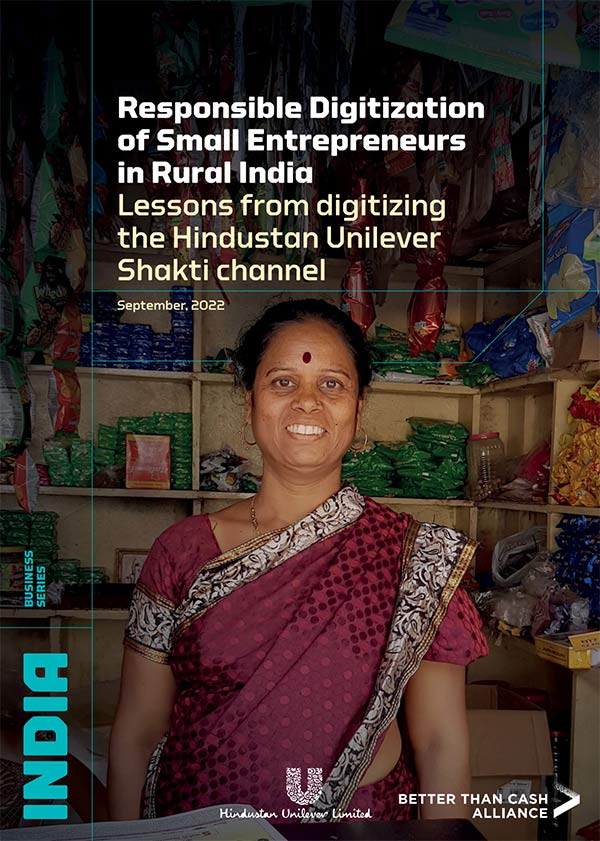
Responsible Digitization of Small Entrepreneurs in Rural India
How has digital technology helped small and medium-sized businesses get a platform to optimize their marketing strategies?
The report presents key insights and opportunities from HUL’s B2B Shakti digitization program to implement the United Nations Principles for Responsible Digital Payments.
The publication synthesizes lessons from digitizing orders and payments for Hindustan Unilever’s Shakti Amma retail network. Re-emerging World was part of the program consortium as the knowledge partner lead from India and has led the development and documentation of the case studies for the report.
You can download the report here.

Browse All Publications
Responsible Digitization of Small Entrepreneurs in Rural India
How has digital technology helped small and medium-sized businesses get a platform to optimize their marketing strategies?
The report presents key insights and opportunities from HUL’s B2B Shakti digitization program to implement the United Nations Principles for Responsible Digital Payments.
The publication synthesizes lessons from digitizing orders and payments for Hindustan Unilever’s Shakti Amma retail network. Re-emerging World was part of the program consortium as the knowledge partner lead from India and has led the development and documentation of the case studies for the report.
You can download the report here.
National Conclave Report: Sanlaap 2022
Since 2015, DRCSC (www.drcsc.org) has been developing climate adaptive capacities for 5,000 climate-impacted families across 40 villages in two of the driest districts in the state of West Bengal –Purulia and Bankura. Funded by the Adaptation Fund Board (www.adaptation-fund.org) and supported by NABARD (www.nabard.org), this program over the past five years has encouraged collective stewardship of soil, water, and green cover, driven the adoption of diversified, integrated farming practices, and strengthened food and livelihood systems for the marginalized tribal communities. This is through the introduction of climate smart technologies, nature-based solutions, and strong program design principles.
As a result, today, 84% of the target households are practicing agriculture for at least two seasons now (as compared to only 2% in 2015), and 86% of the target households do not experience any hunger period (as compared to only 2% in 2015). While no households were practicing fisheries and nutrition gardens before, today 62% and 68% of the target households practice them, respectively. Furthermore, hyperlocal weather advisory services, one of the key interventions in the program areas, have helped reduction in farm input costs by 35% among the target households.
These impacts are a direct result of carefully designing, piloting, iterating, and gradually scaling up innovative practices, which are potential lessons for policymakers, practitioners, Governments, and institutions in maximizing their impact. As DRCSC’s knowledge partner, Re-emerging World (www.re-emergingworld.com) has synthesized these learnings into a lessons learned report distilling eight key lessons as inputs for policy considerations while implementing similar programs.
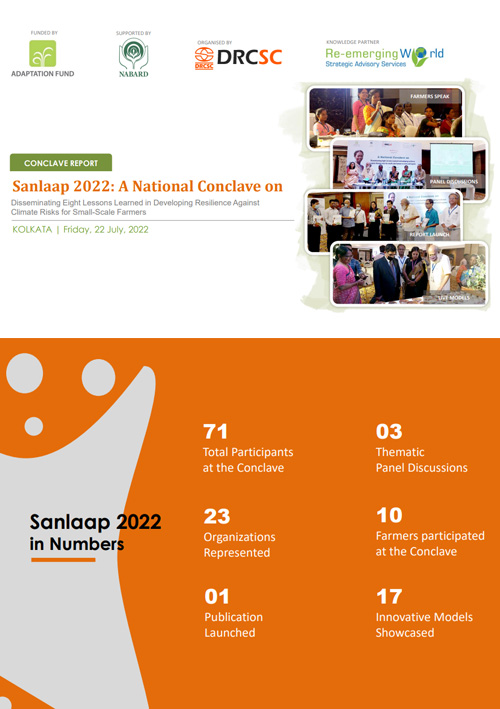
On Friday, 22 July 2022, the consortium partners organised Sanlaap2022: A National Conclave in Kolkata, India to disseminate these eight key lessons which have emerged from the program. The conclave participants witnessed three thematic expert panel discussions, experience sharing by adopter farmers, and the launching of the lessons learned publication. You can find the conclave agenda here: https://bit.ly/conclaveagenda.
This report shares key highlights, perspectives, and takeaways of the sessions from the conclave.
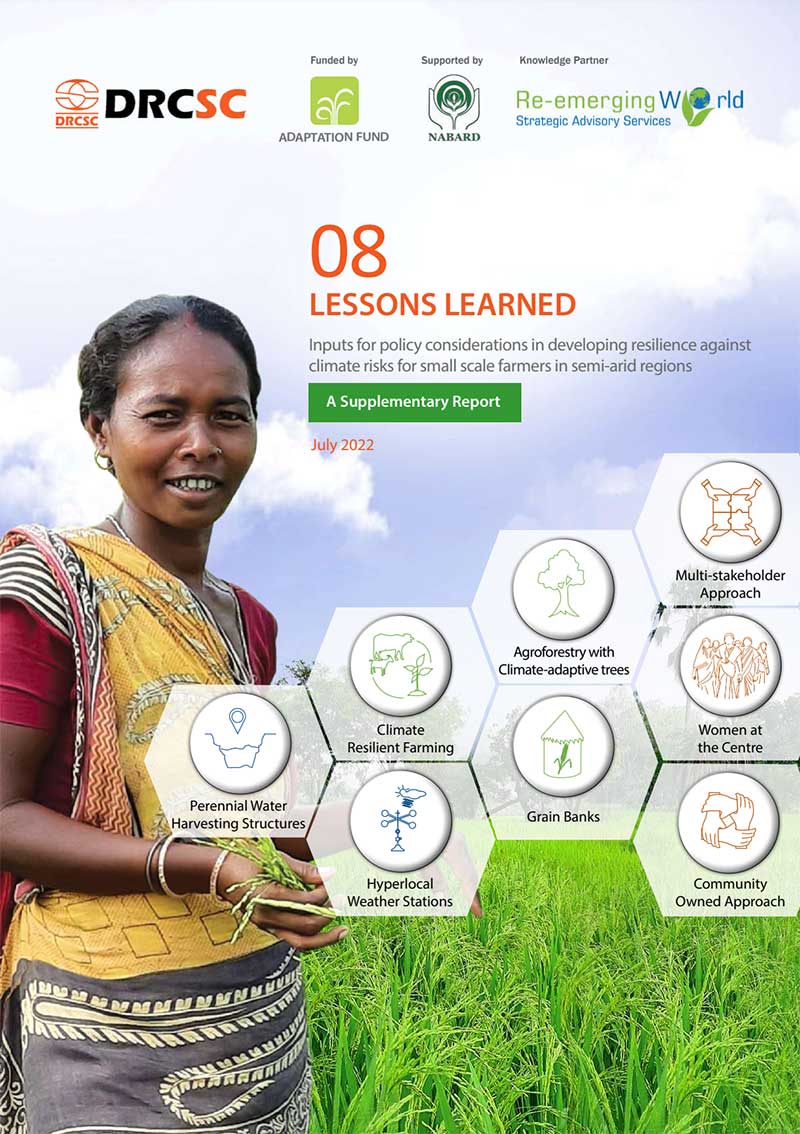
Eight Lessons Learned: Inputs for policy considerations in developing resilience against climate risks for small scale farmers in semi-arid regions, full report
How can a climate change adaptation program for small scale farmers maximize its effectiveness and impact?
This report outlines eight lessons learned which has helped Development Research Communication and Services Centre (DRCSC) design and implement an Adaptation Fund sponsored and NABARD supported climate change adaptation project in 40 villages of Purulia and Bankura districts of West Bengal in between 2015 and 2021.
The lessons, thus, have a strong evidence base, and this report offers practical solutions for climate change practitioners, policymakers, government, and private organizations who want to implement similar climate change adaptation programs in drylands, drought-prone areas, and semi-arid regions of India. The document aims to inform policy recommendations for climate change adaptation programs specifically for small and marginal farmers.
You can download the report here
Eight Lessons Learned: Inputs for policy considerations in developing resilience against climate risks for small scale farmers in semi-arid regions
How can a climate change adaptation program for small scale farmers maximize its effectiveness and impact?
This report outlines eight lessons learned which has helped Development Research Communication and Services Centre (DRCSC) design and implement an Adaptation Fund sponsored and NABARD supported climate change adaptation project in 40 villages of Purulia and Bankura districts of West Bengal in between 2015 and 2021.
The lessons, thus, have a strong evidence base, and this report offers practical solutions for climate change practitioners, policymakers, government, and private organizations who want to implement similar climate change adaptation programs in drylands, drought-prone areas, and semi-arid regions of India. The document aims to inform policy recommendations for climate change adaptation programs specifically for small and marginal farmers.
You can download the report here.
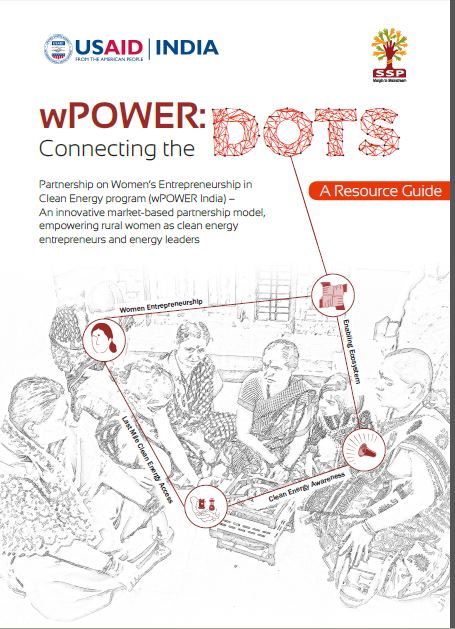
wPOWER: Connecting the Dots, A Resource Guide
”My message to the wPOWER women entrepreneurs is…You are leading the clean energy revolution. Please don’t stop it.” expressed Colin Dreizen, Director, Clean Energy & Environment Office, USAID India at the recently concluded wPOWER Global Partnership Forum 2015.
The Global Partnership forum saw the official launch of the Resource Guide titled “wPOWER: Connecting the Dots” a knowledge product created by Re-emerging World. The resource guide outlines how wPOWER India adopts a market-based approach to help the entire clean energy value chain provide workable solutions for rural India.
Mainstream interventions have attempted to address rural access to clean energy in the past. Majority of large scale efforts have focused on generating clean energy awareness or on providing access to clean energy solutions. Women’s empowerment efforts have promoted entrepreneurship while wider development efforts have aimed to create a supportive stakeholder ecosystem. Very few initiatives on scale, have however, attempted to address all of these issues at one go. This is where, wPOWER India is unique.
The Resource Guide explains about this uniqueness and how the wPOWER initiative connects all the vital dots
- Women entrepreneurship,
- Clean energy awareness, last mile clean energy access
- An enabling partnership ecosystem.
It aims to equip readers with an understanding of how a diverse ecosystem comprising of various stakeholders including donors, the private sector, government agencies and financial institutions can contribute towards scaling and replicating the wPOWER India model.
Click the below link to access and download the full guide.
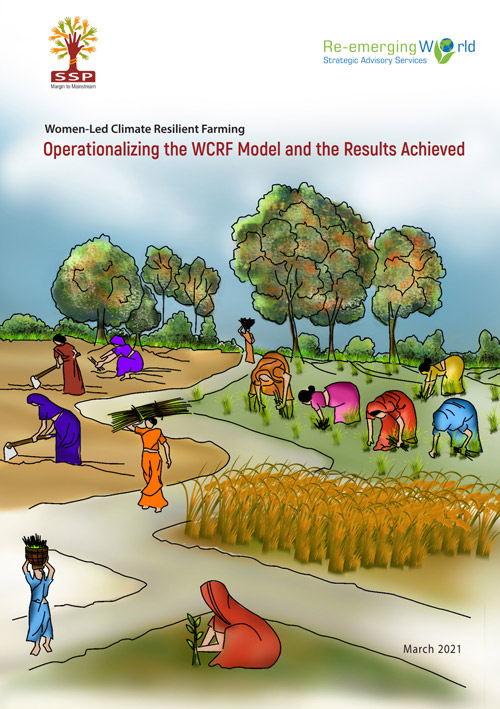
Women Led Climate Resilient Farming: Operationalising the Model and the Results Achieved
How do you build, enable, and sustain a climate-resilient farming model with women as the central part of it? This report exactly answers that.
Over the years, Swayam Shikshan Prayog (SSP) has evolved its sector strategy in agriculture into a model where it is designed, implemented, and led by local women transforming livelihoods, food security, and water security for small and marginal farming households. This document synthesises the learnings in operationalizing the WCRF model and captures the impacts it has delivered.
The report is aimed at introducing and sharing SSP’s operating philosophy, on the ground approach and stakeholder engagement strategy in achieving the results with key Government departments, policy making institutions, relevant private sector partners, and any organization curious about SSP’s model.
This report will help sector partners from different spheres in learning and appreciating what goes behind in developing a robust Women-led Climate Resilient Farming Model and inspire them to invest and collaborate.
You can download the report here.
Get The Latest From The Social Sector In Your Inbox

Subscribe to our newsletter
View Blog Posts
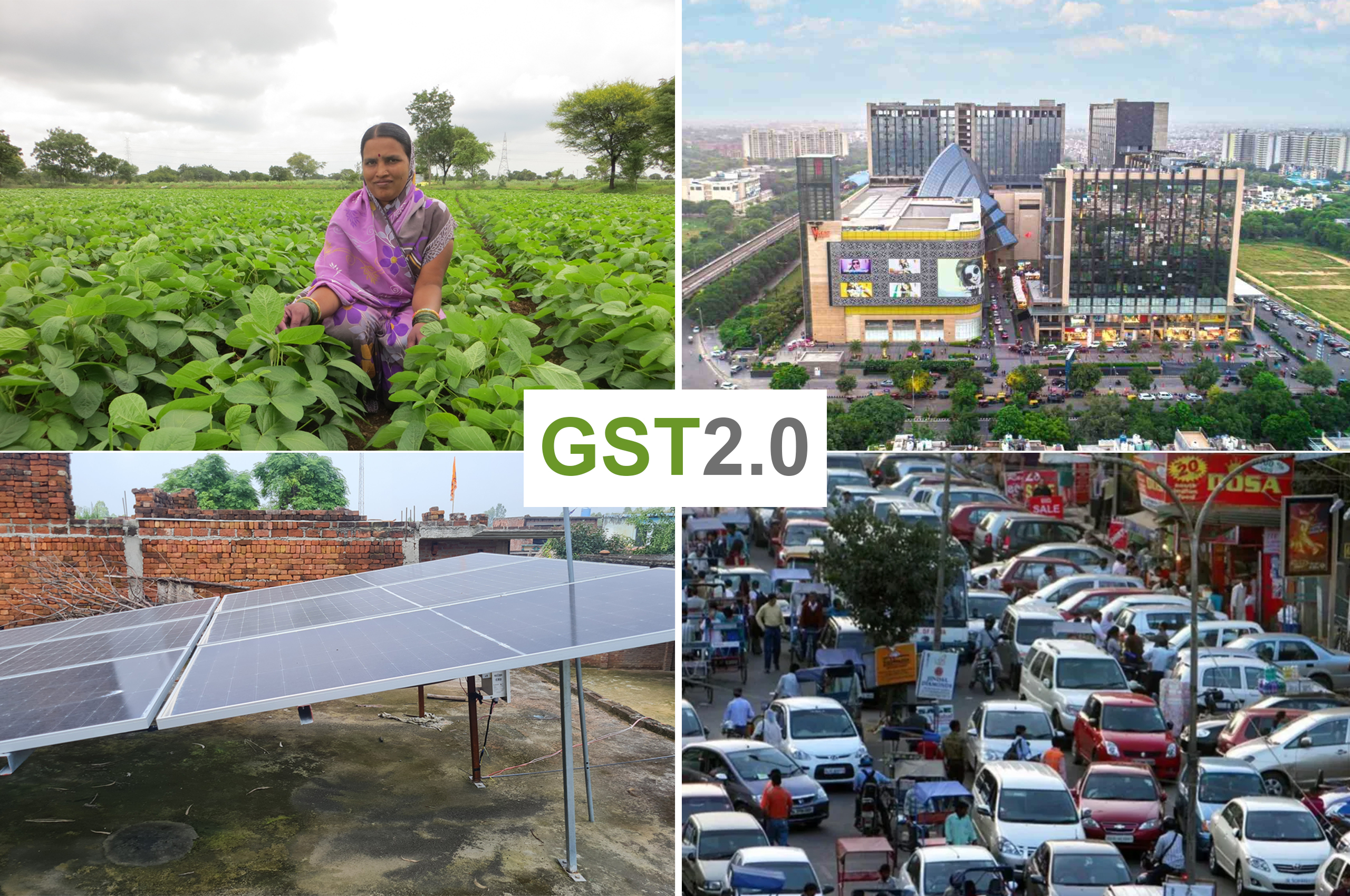
GST 2.0 and Tax Cuts: Can They Make Growth Fairer and Greener?
India's latest GST reform, being termed as GST 2.0, is more than just slashing rates. By simplifying the tax structure, cutting levies on essentials, and supporting renewable infrastructure, it's open..
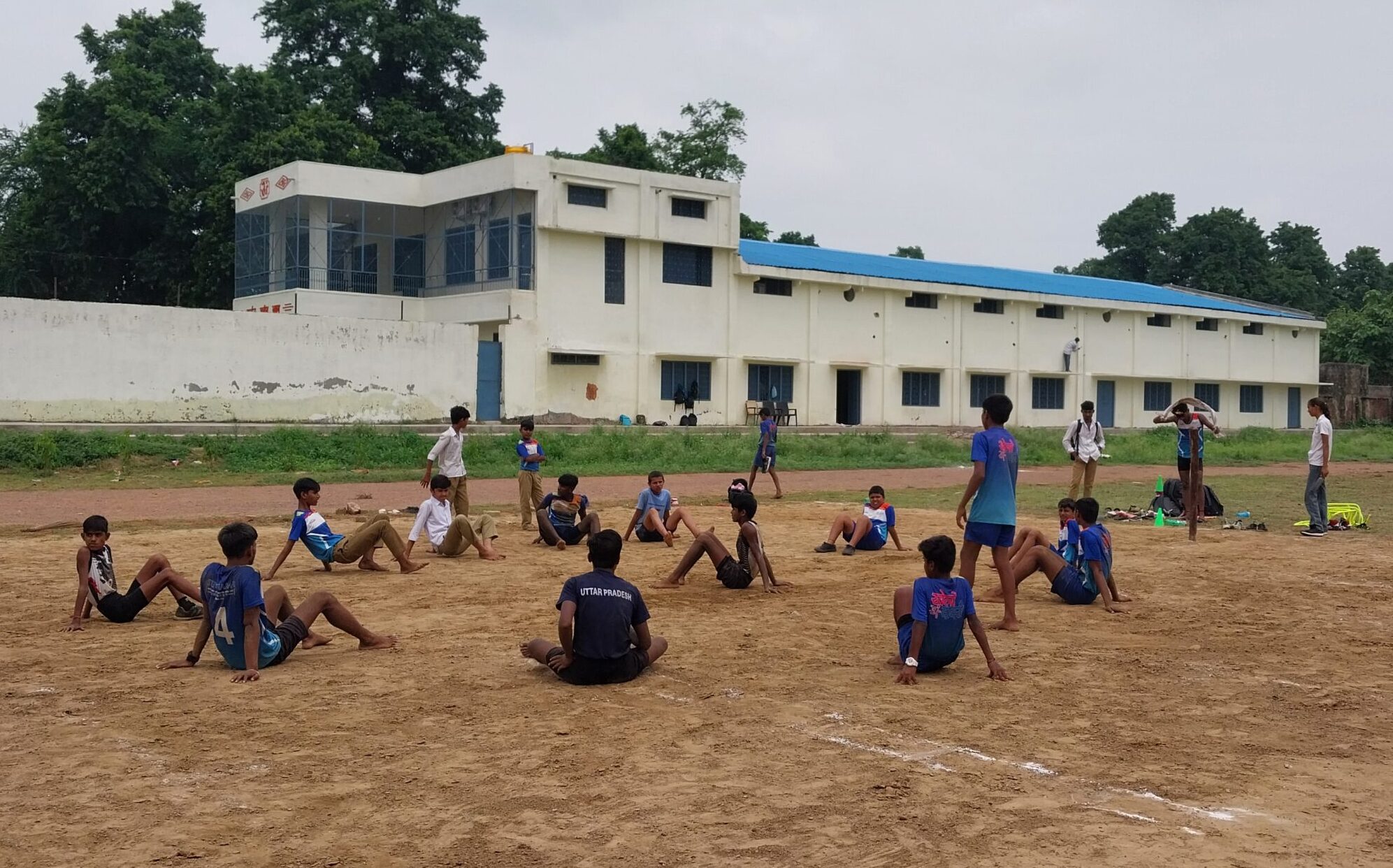
Reimagining Sports in CSR: From Tokenism to a Vehicle for Multiplying Impact
In 2023–24, Indian companies spent about ₹1,396 crore of their CSR budgets on sports — just 4% of the total ₹34,909 crore Indian corporates spent on CSR that year. Most of the rest went to edu..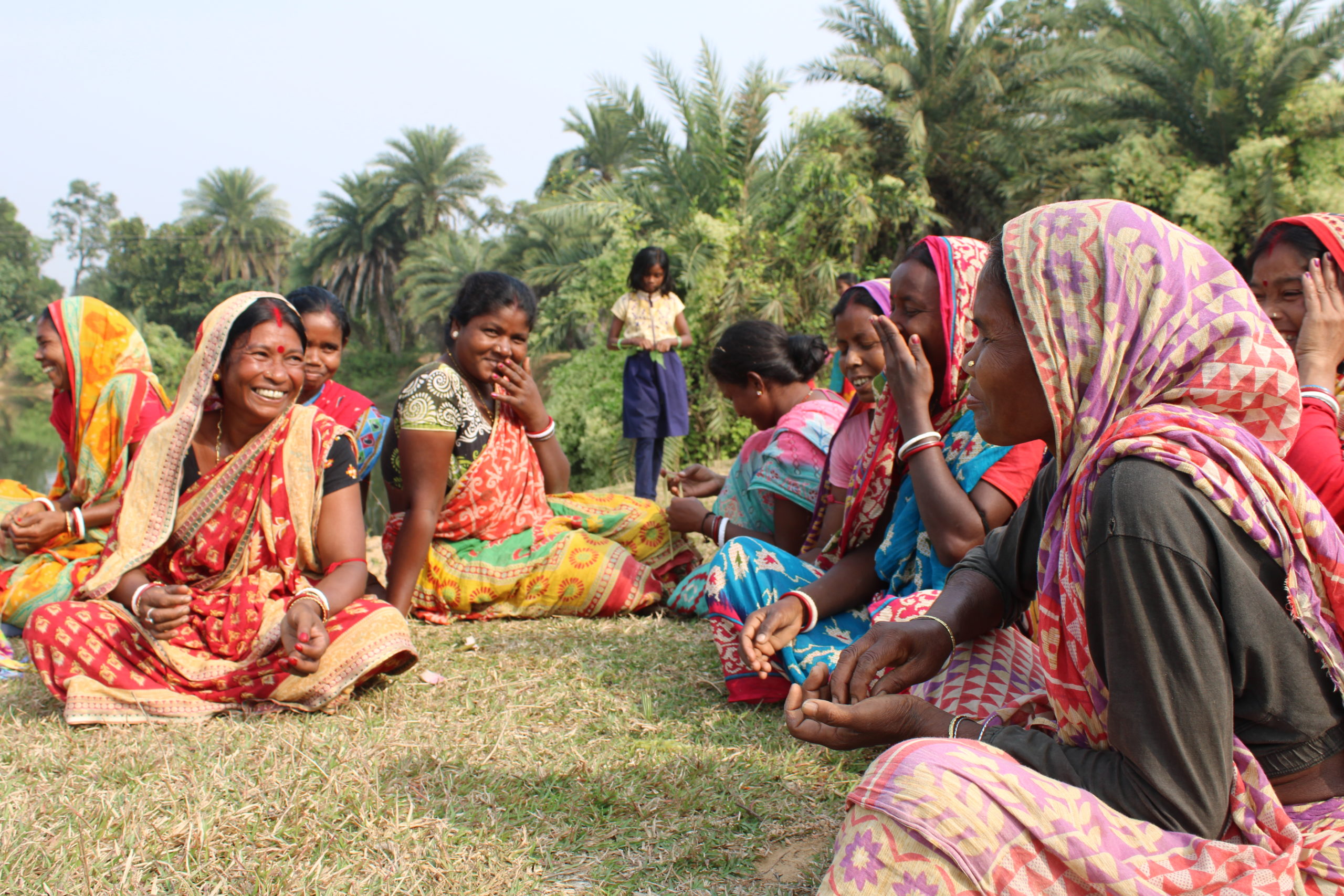
Interactive SHG Map of India: 7.5 million Women Self Help Groups are spread across 27 States and 6 UTs in India
Under the National Rural Livelihood Mission (NRLM), India has 7.5 million Women Self Help Groups (SHGs) spread across 27 states and 6 Union Territories. Each of these small, self-governed, and peer-co..