
Recent Developments,
Key Innovations, and
Insightful Reports
Your One Stop Platform for Regular Sector Updates
Sector news
View By Category
Categories
- See all
- Agriculture
- Clean Cookstoves
- Clean Energy
- Climate Action
- Digital Technology
- Education
- Financial Services
- General
- Healthcare
- Hygiene
- Impact Investment
- Inclusive Value Chains
- Livelihoods
- Livestock
- Lower Income Consumers
- Marketing, Distribution and Sales for BoP
- Nutrition
- Sanitation
- Water
- Women Empowerment


December 7, 2012
Husk Power Systems raise US$5 million for expansion purposes
The famous social enterprise in Bihar, India, that runs a chain of micro power plants with agricultural waste as the raw material have now raised INR 270 million or US$ 5 million from Bamboo Finance, Acumen Fund and LGT Venture Philanthropy for the purpose of expansion. Read more here.
December 7, 2012
d.light celebrating 10 million customers served
d.light design has been selling solar lanterns for a long time now, and their lantern designs are durable and can be found across several countries where social enterprises or developmental aid activities are ongoing. They recently sold their 10 millionth lantern. Read more here.
December 7, 2012
Four African teens put together a generator that runs on urine
Four teens have showcased their innovative power generating model at the recent Maker Faire Africa in Lagos, Nigeria. What is special about their generator is that it runs on urine. For about a litre of urine, the generator runs for about 6 hours providing electricity. Read more here.
December 7, 2012
Trends and Developments in the Africa Off-Grid Lighting Market
This report by Lighting Africa, a market development programme supporting creation, expansion of clean energy markets in SSA (sub-Saharan Africa) projects that sales of quality solar lanterns in SSA has increased by 300 per cent between 2008 and 2012. Read more here, and read the report here.
December 7, 2012
US: Research funding provided for clean cookstoves
The US Department of Energy (US DOE) is looking to grant an amount of US$2.5 million for research into innovative clean cookstoves for use in developing countries, burning wood or crop residues. Read more here.
December 7, 2012
Halton Foundation awards US$30,000 to the Himalayan Stove Project
The Halton Foundation has granted the Himalayan Stove Project an amount of US$30,000 which will aid in scaling their activities of providing clean cooking support in the trans-Himalayan regions, thereby helping to improve health of the people of the trans-Himalayan region. Read more here.
December 7, 2012
Soros Economic Development Fund and Industrialization Fund for Developing Countries invest in CleanStar Mozambique
The Soros Economic Development Fund and Industrialization Fund for Developing Countries will soon collectively invest US$9 million in CleanStar Mozambique, a social enterprise in Mozambique that replaces the use of inefficient fuel charcoal with efficient and smokeless biofuel, made from cassava. Read more here and here.
December 7, 2012
Measurement and modelling of IAP in rural households with multiple stove interventions
This study concentrates on measurement and modelling of IAP or indoor air pollution with multiple stove interventions as an experiment in Yunnan, China to find notable differences in the quality of air with efficient and inefficient cookstoves. Read more here.
December 7, 2012
Colorado State University wind US DOE US$1 million research award
The US Department of Energy has awarded the Colorado State University’s Engines and Energy Conversion Lab an amount of US$1 million to work on the efficiency of biomass cookstoves. Read more here.
Get The Latest From The Social Sector In Your Inbox

Subscribe to our newsletter
View Our Publications
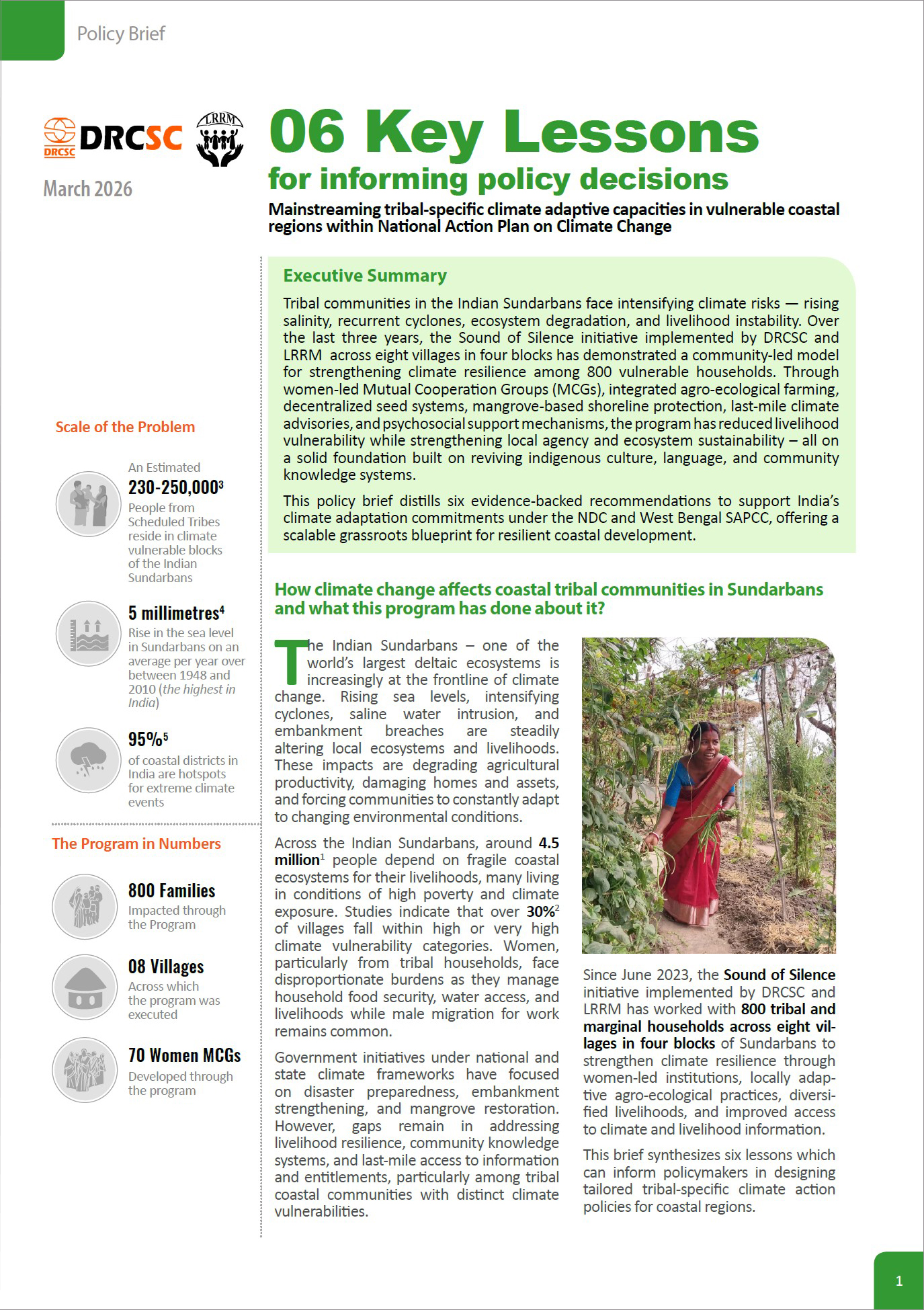
06 Key Lessons for informing policy decisions: Mainstreaming tribal-specific climate adaptive capacities in vulnerable coastal regions within National Action Plan on Climate Change
Download Full Report
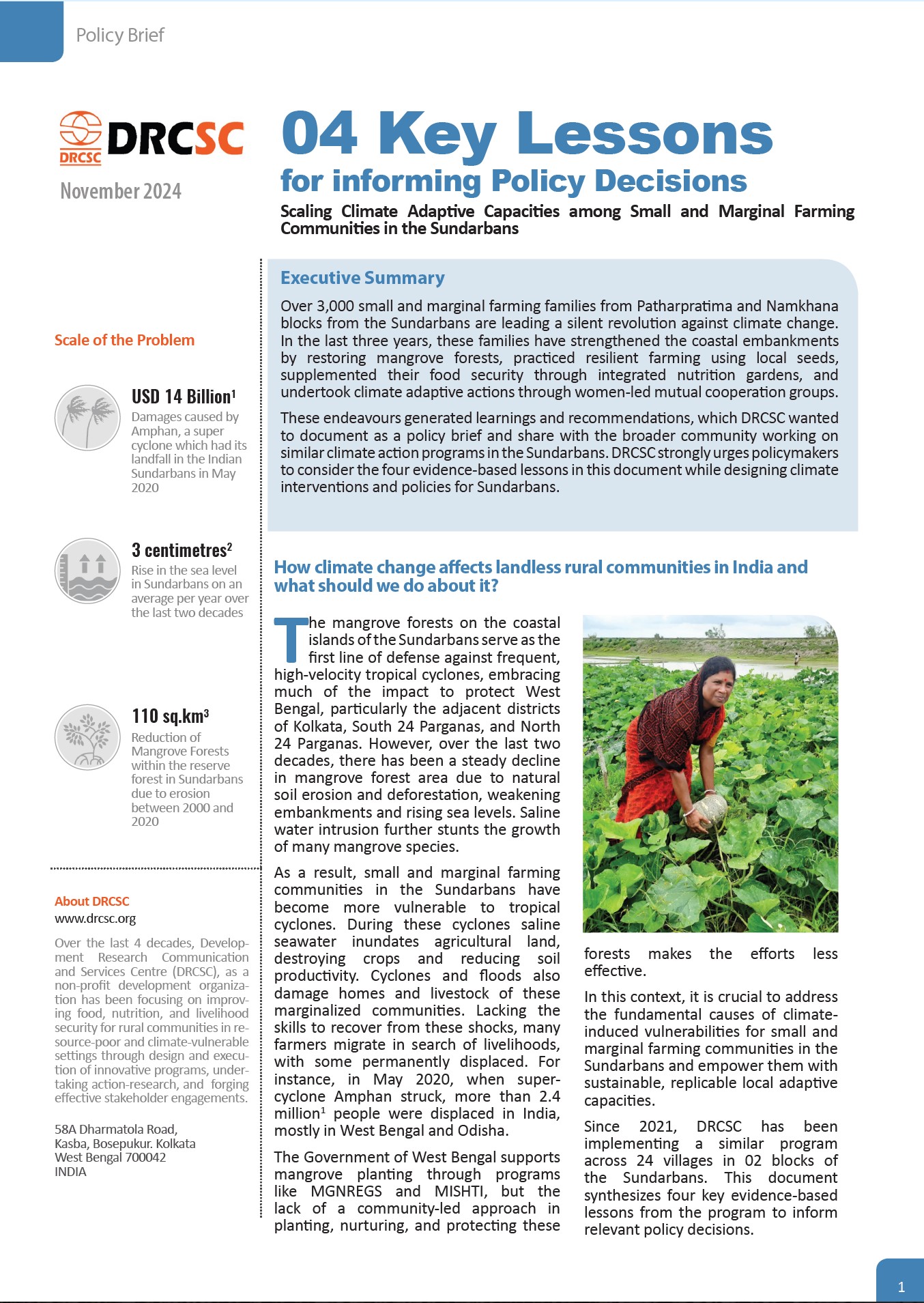
Four Key Lessons for Policy Consideration: Scaling Climate Adaptive Capacities among Small and Marginal Farming Communities in the Sundarbans
Download Full Report
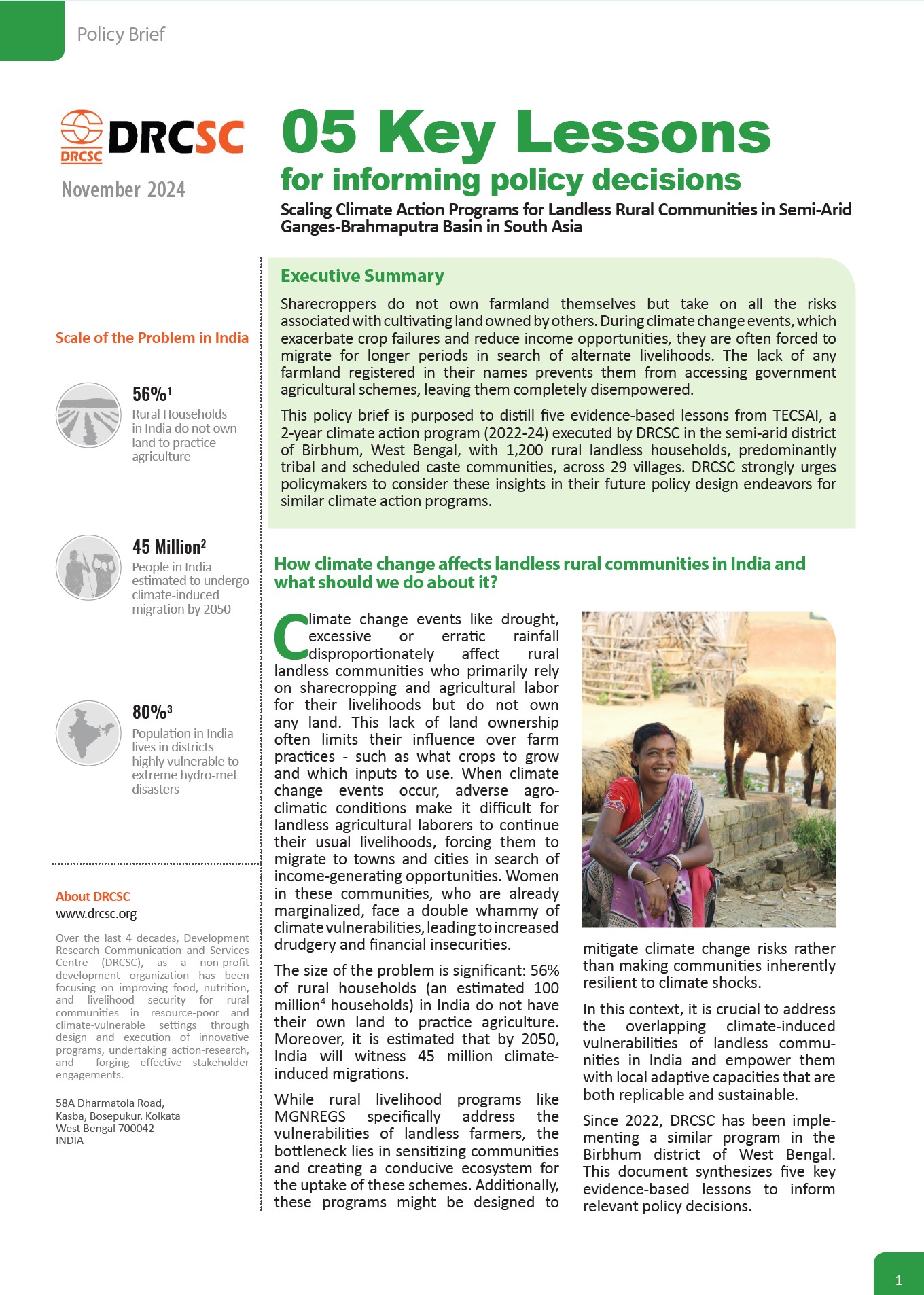
Five Key Lessons for Policy Consideration: Scaling Climate Action Programs for Landless Rural Communities in Semi-Arid Ganges-Brahmaputra Basin in South Asia
Download Full Report
View Blog Posts
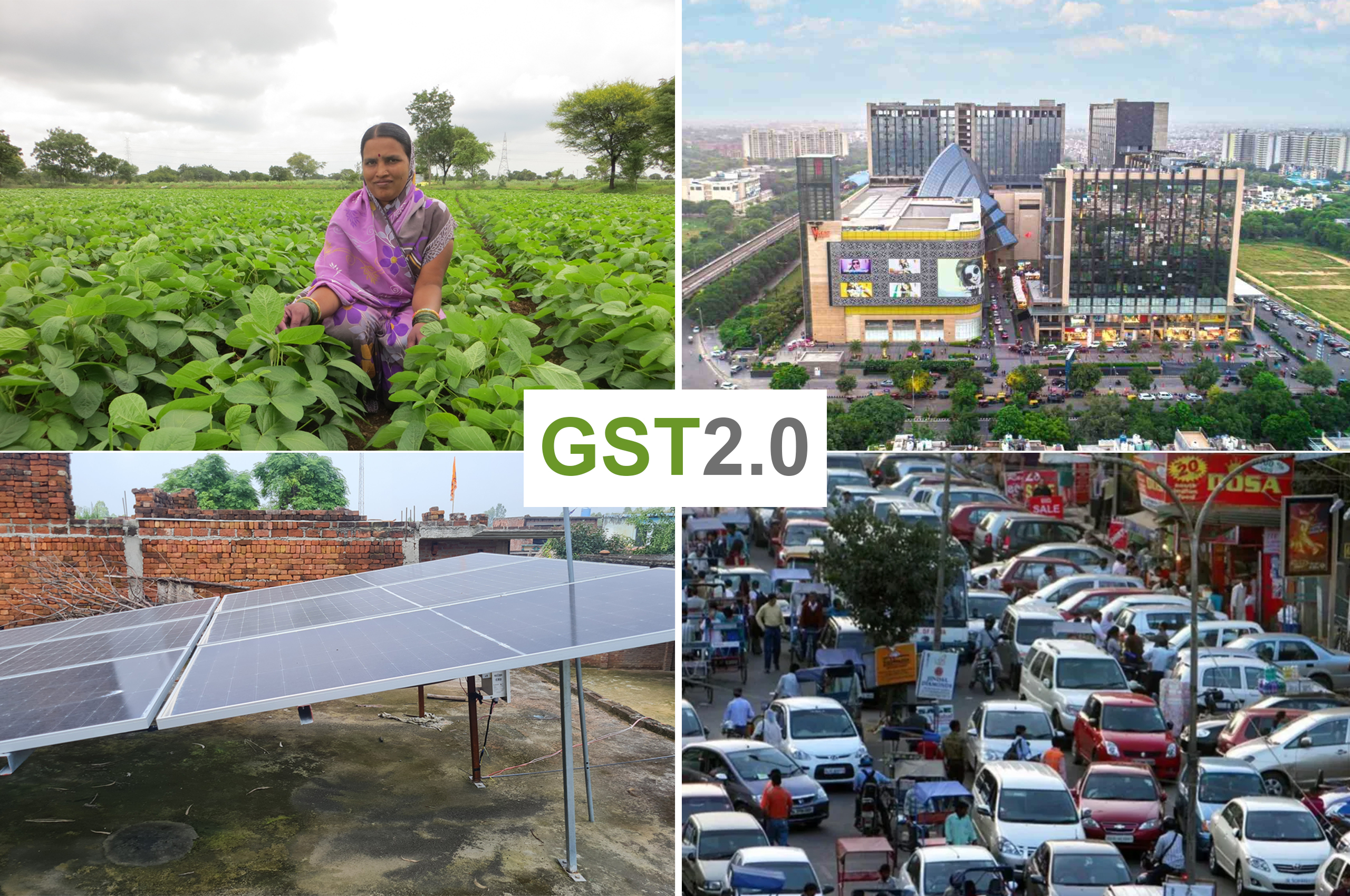
GST 2.0 and Tax Cuts: Can They Make Growth Fairer and Greener?
India's latest GST reform, being termed as GST 2.0, is more than just slashing rates. By simplifying the tax structure, cutting levies on essentials, and supporting renewable infrastructure, it's open..
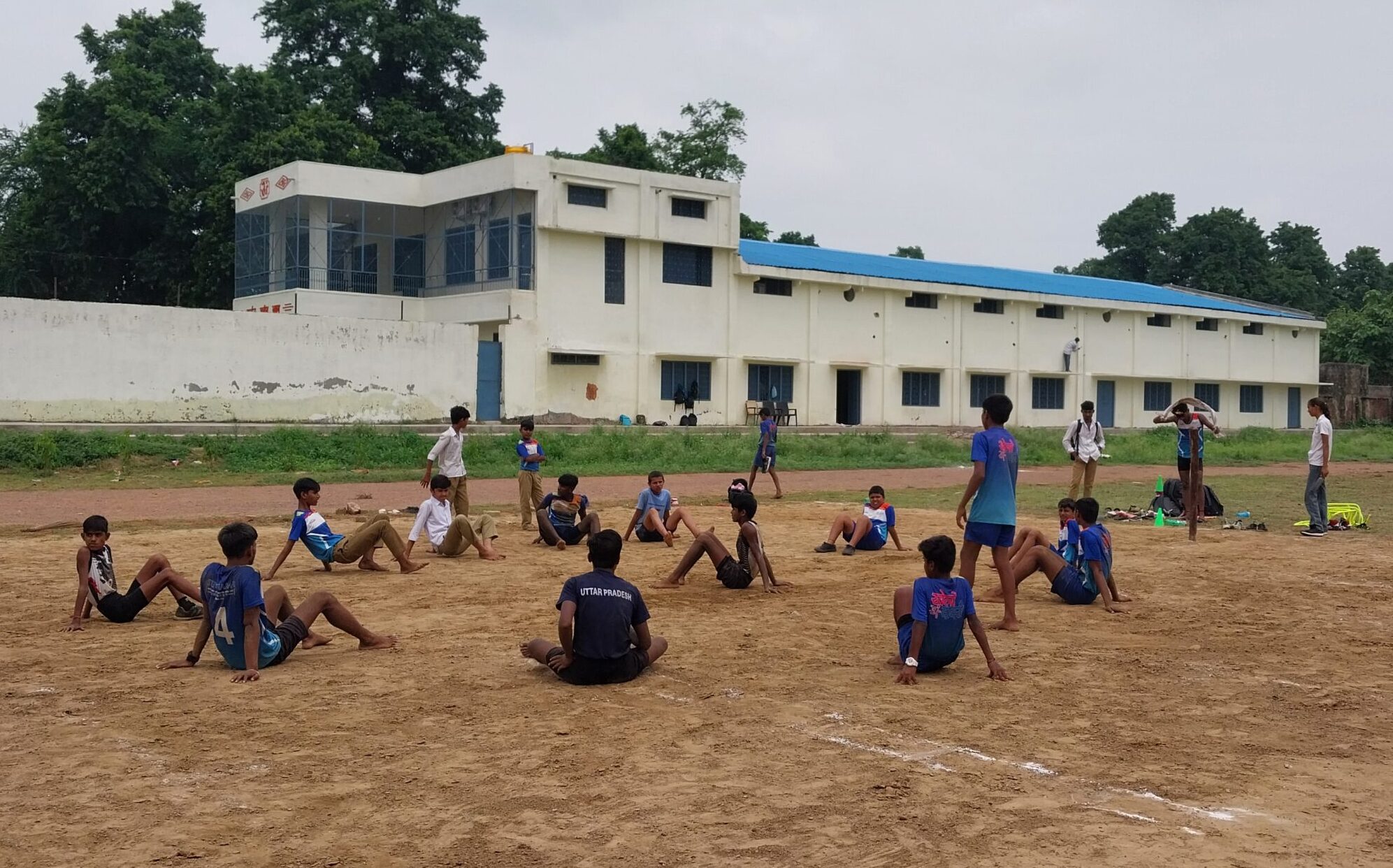
Reimagining Sports in CSR: From Tokenism to a Vehicle for Multiplying Impact
In 2023–24, Indian companies spent about ₹1,396 crore of their CSR budgets on sports — just 4% of the total ₹34,909 crore Indian corporates spent on CSR that year. Most of the rest went to edu..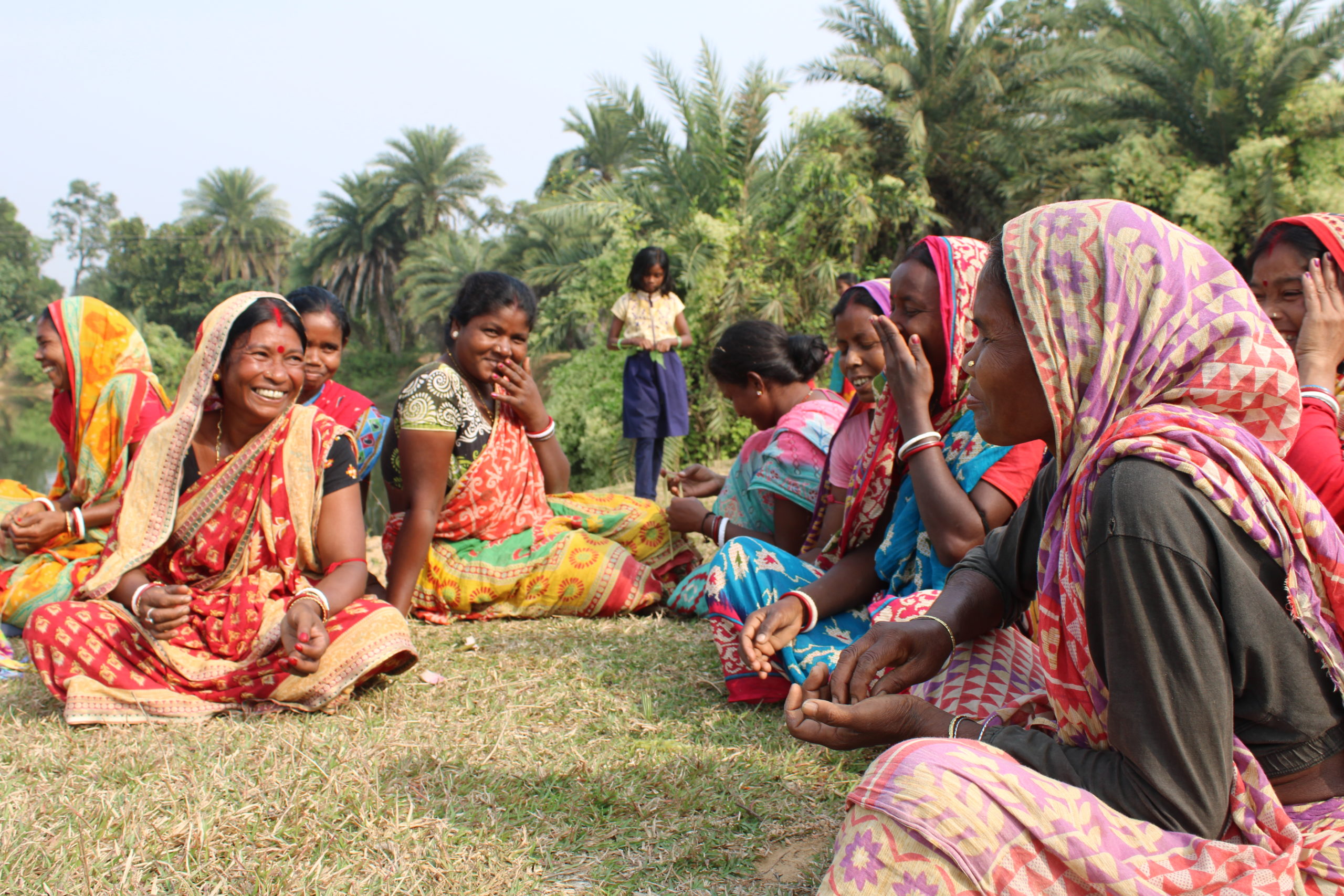
Interactive SHG Map of India: 7.5 million Women Self Help Groups are spread across 27 States and 6 UTs in India
Under the National Rural Livelihood Mission (NRLM), India has 7.5 million Women Self Help Groups (SHGs) spread across 27 states and 6 Union Territories. Each of these small, self-governed, and peer-co..