
Recent Developments,
Key Innovations, and
Insightful Reports
Your One Stop Platform for Regular Sector Updates
Sector news
View By Category
Categories
- See all
- Agriculture
- Clean Cookstoves
- Clean Energy
- Climate Action
- Digital Technology
- Education
- Financial Services
- General
- Healthcare
- Hygiene
- Impact Investment
- Inclusive Value Chains
- Livelihoods
- Livestock
- Lower Income Consumers
- Marketing, Distribution and Sales for BoP
- Nutrition
- Sanitation
- Water
- Women Empowerment


October 12, 2012
Microinsurance kicks off in Brazil
Brazil microinsurance regulatory body Susep, which began its operations in October 1 has a number of large insurance companies lining up to register for microinsurance products, eager to tap the largely underserved microinsurance market in Brazil. Read more here.
October 12, 2012
Insuring African farmers against climate change
Microfinance companies are now looking at providing the poor farmers in Africa with crop insurance. This is based on a successful model in India wherein insurers use a reliable weather predicting system to work out claims and in the process also make reliable returns. Read more here.
October 12, 2012
Peru has the best microfinance ranking in the world
The Latin American country of Peru has been awarded the title of the country with the best legal, policy and other frameworks which facilitate the growth, fair governance health competition of microfinance stakeholders, globally. Peru and Bolivia have emerged the leaders in the rapidly progressing microfinance operations in the Latin […]
October 12, 2012
SKS’s shares bought by Morgan Stanley
The Asian arm of Morgan Stanley bought about 4.5 million shares of SKS Microfinance, the Indian microfinance company that threw the microfinance sector into a lurch in 2010 with the epicentre of its operations in Andhra Pradesh. These shares were bought through a bulk deal offered by the BSE or […]
October 12, 2012
Nigeria: How big insurers shun microinsurance
The underwriting companies in the Nigerian insurance sector are highly segmented because of the market influence of a few powerful players. Most of these companies have yet to show any real interest in the microinsurance sector of Nigeria. Read more here.
October 12, 2012
Zambia: 90 per cent of all microfinance loans taken for consumption purposes
According to Dr Bwalya N’Gandu, the Bank of Zambia Deputy Governor of Operations, about 90 per cent of all the microloans given to people currently is for consumption purposes, and a complete mismatch from microfinance’s idealistic aim of supporting entrepreneurial activities. He has called on the microfinance sector of the […]
October 12, 2012
Process mapping for microinsurance operations: A toolkit for understanding and improving business processes and client value
This report, supported by the Microinsurance Centre, IFAD, and Microfinance Centre, is meant to be a guide for microinsurance institutions and agencies. It introduces a technique called ‘process mapping’ which essentially helps the institutions understand, develop and improve their business processes. Read the report here.
October 12, 2012
Sri Lanka: 65,000 housing units for the poor in Colombo to be made
Identified blocks of state land in 15 locations in Colombo city will be utilized for the purpose of constructing low cost housing units for the underserved and poor people in Colombo, according to a proposal made by the President of the country. Read more here.
October 12, 2012
Uganda: New housing policy to serve 4 million launched
Uganda has a scarcity of 105,454 housing stock in urban areas, and 505,091 housing stock in rural areas, and with the current annual production of housing units, there is a shortfall of 120,000 units per year. To address this need, the government of Uganda is in the final stages of […]
Get The Latest From The Social Sector In Your Inbox

Subscribe to our newsletter
View Our Publications
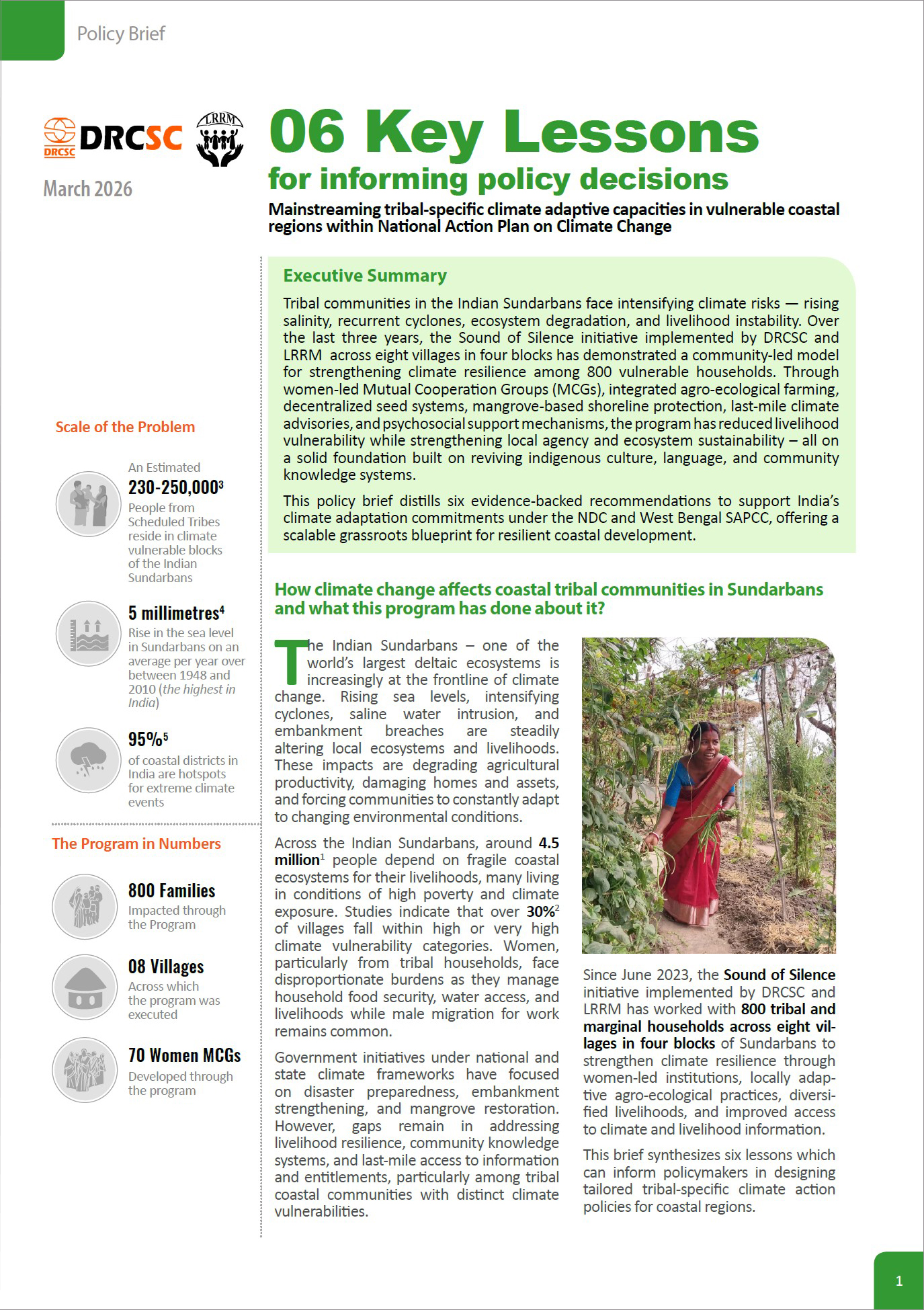
06 Key Lessons for informing policy decisions: Mainstreaming tribal-specific climate adaptive capacities in vulnerable coastal regions within National Action Plan on Climate Change
Download Full Report
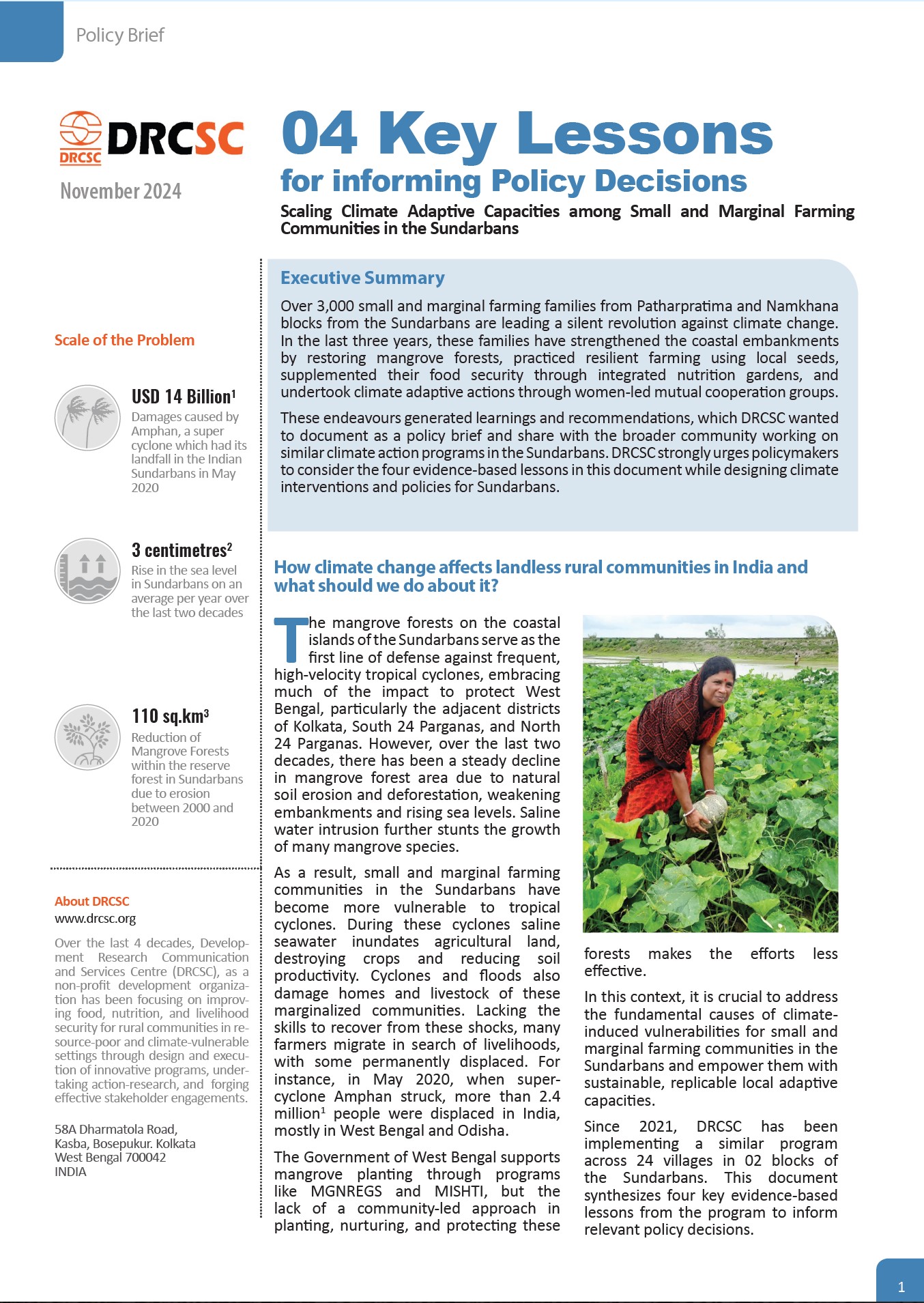
Four Key Lessons for Policy Consideration: Scaling Climate Adaptive Capacities among Small and Marginal Farming Communities in the Sundarbans
Download Full Report
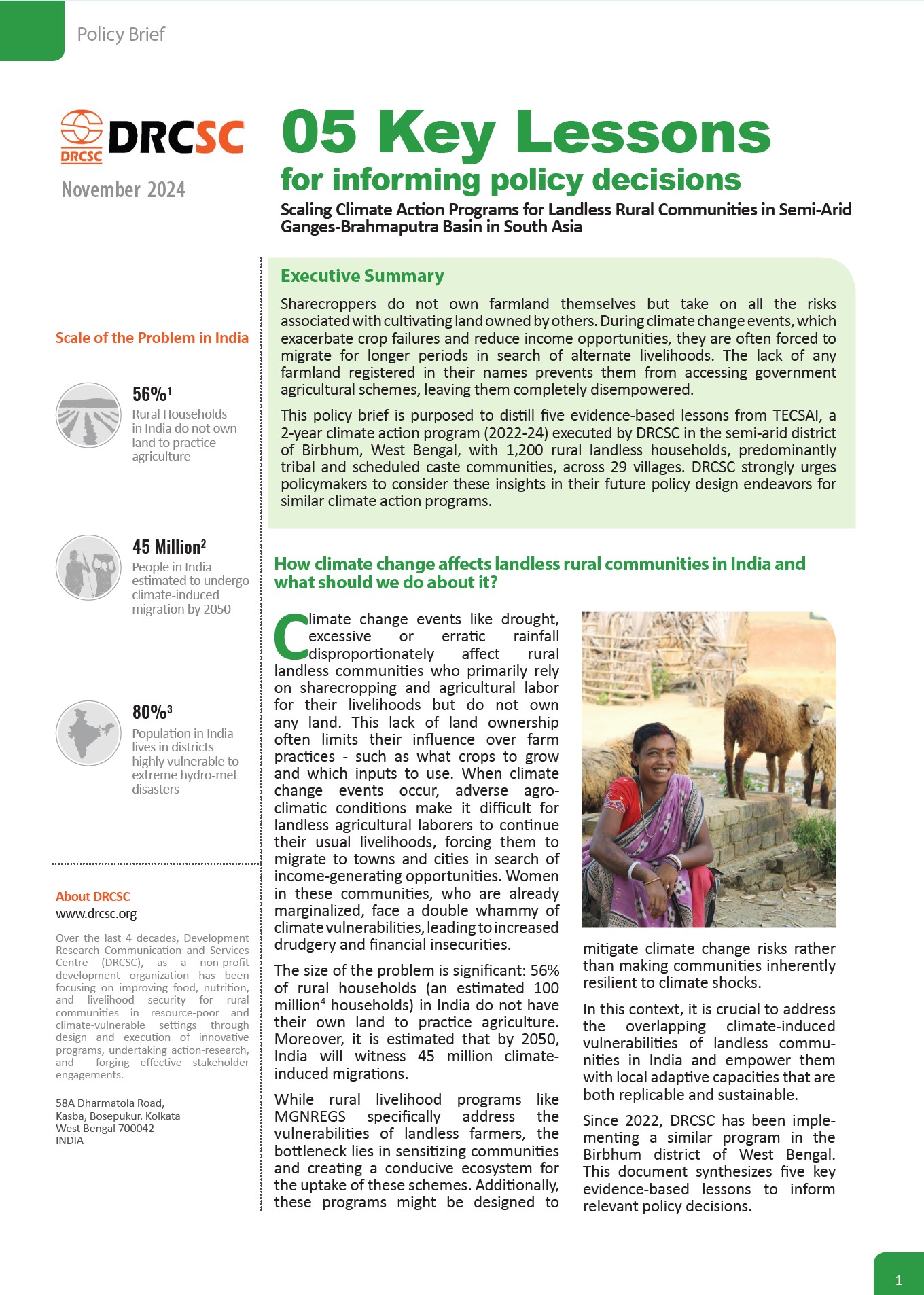
Five Key Lessons for Policy Consideration: Scaling Climate Action Programs for Landless Rural Communities in Semi-Arid Ganges-Brahmaputra Basin in South Asia
Download Full Report
View Blog Posts
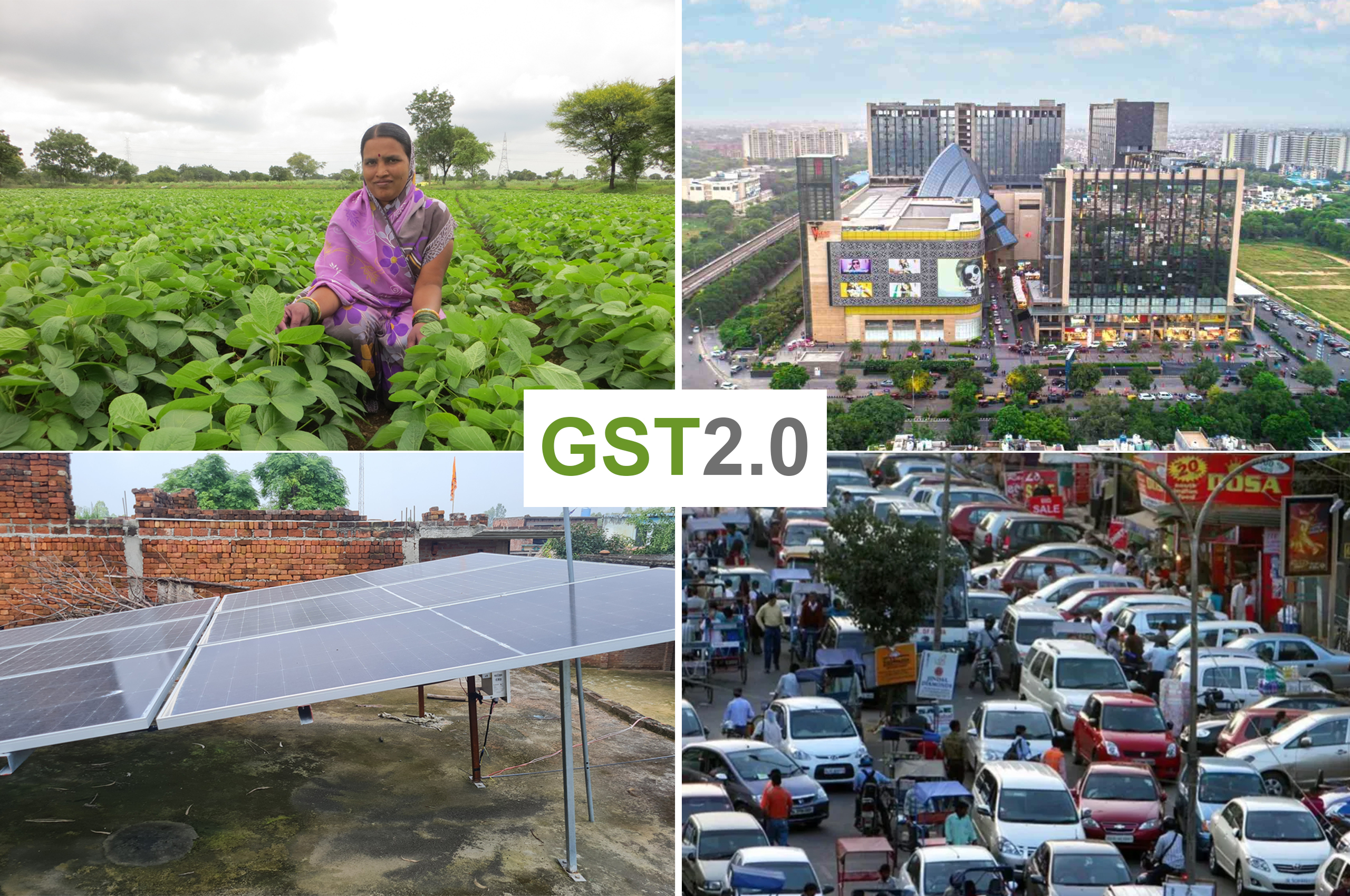
GST 2.0 and Tax Cuts: Can They Make Growth Fairer and Greener?
India's latest GST reform, being termed as GST 2.0, is more than just slashing rates. By simplifying the tax structure, cutting levies on essentials, and supporting renewable infrastructure, it's open..
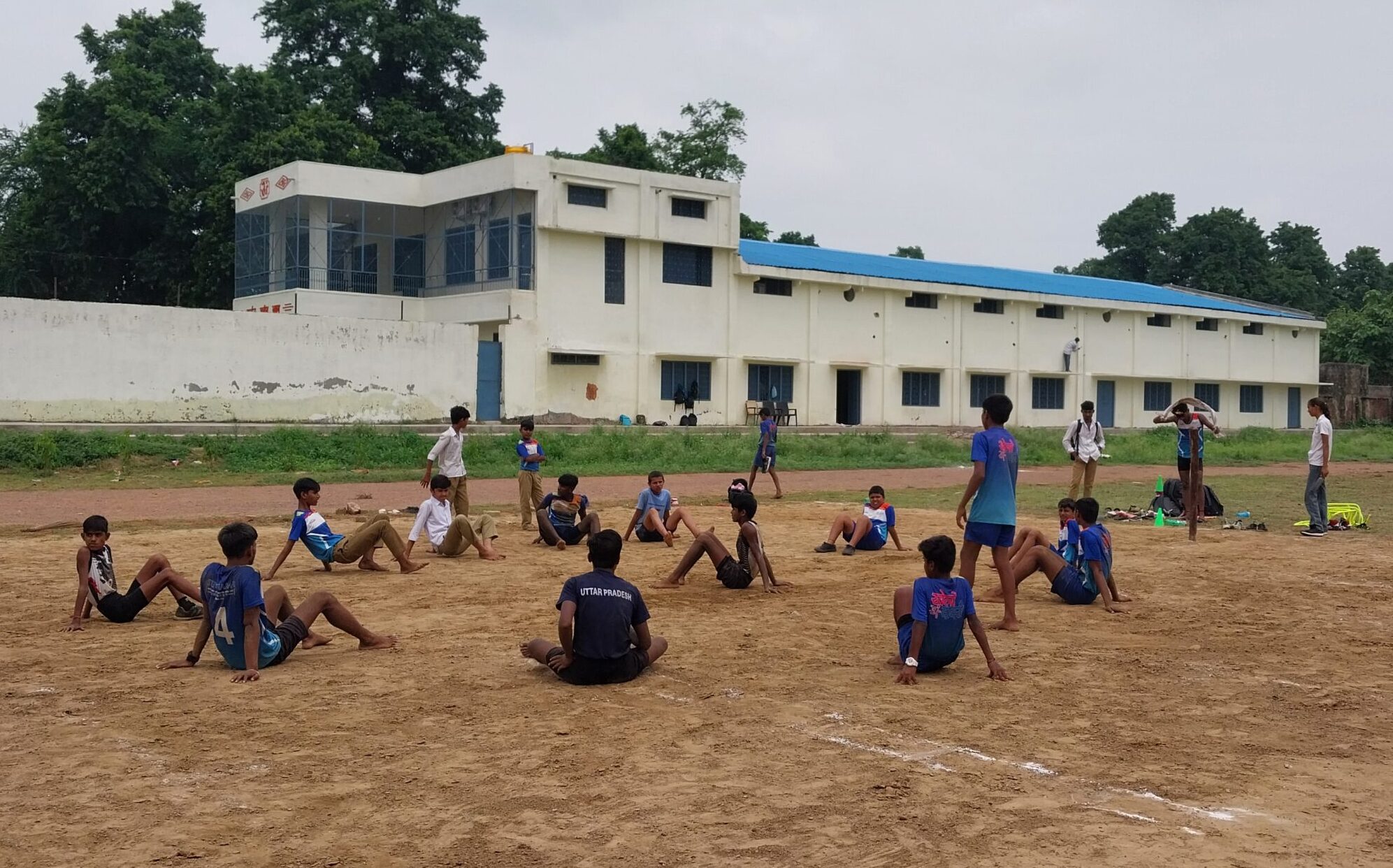
Reimagining Sports in CSR: From Tokenism to a Vehicle for Multiplying Impact
In 2023–24, Indian companies spent about ₹1,396 crore of their CSR budgets on sports — just 4% of the total ₹34,909 crore Indian corporates spent on CSR that year. Most of the rest went to edu..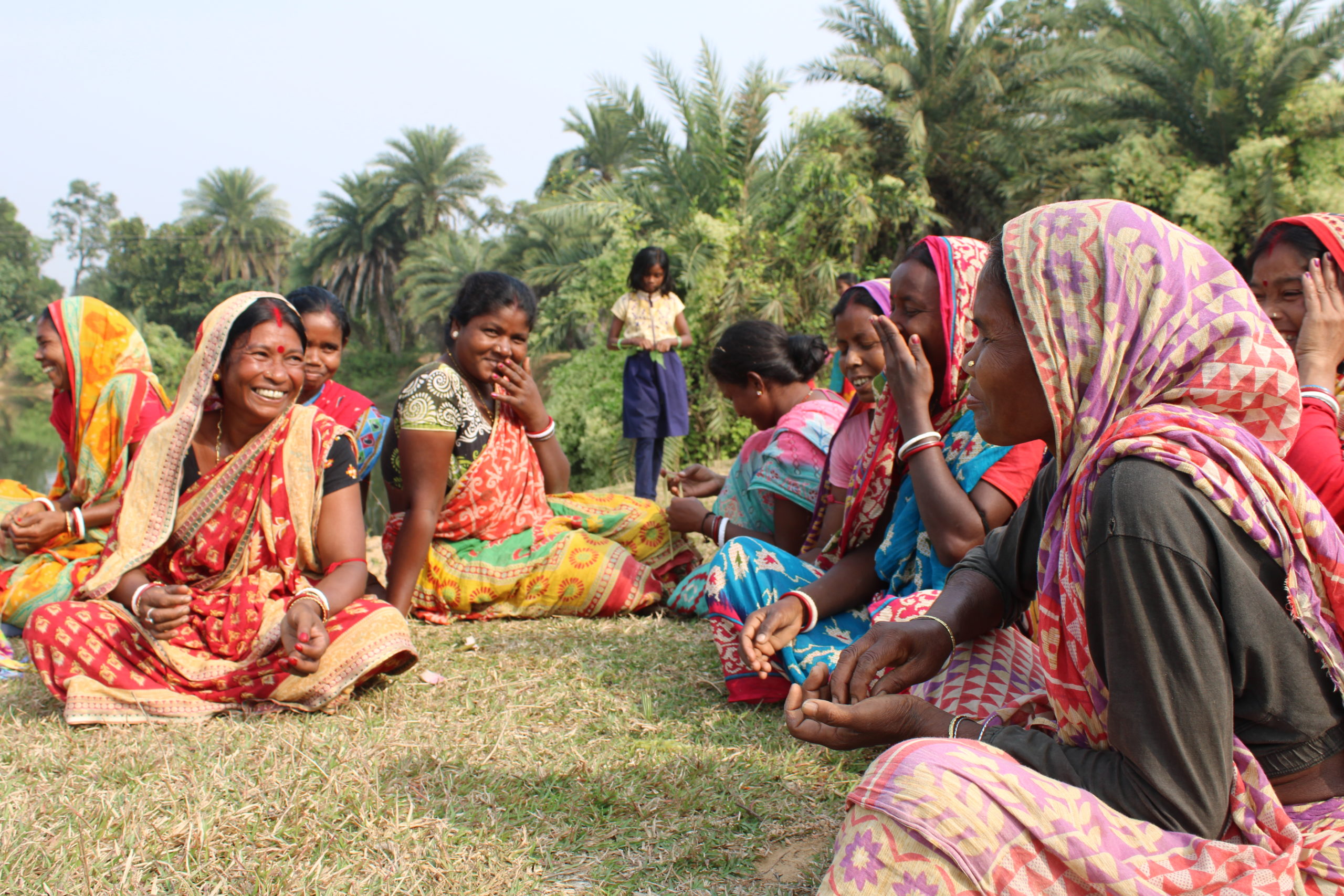
Interactive SHG Map of India: 7.5 million Women Self Help Groups are spread across 27 States and 6 UTs in India
Under the National Rural Livelihood Mission (NRLM), India has 7.5 million Women Self Help Groups (SHGs) spread across 27 states and 6 Union Territories. Each of these small, self-governed, and peer-co..