
Recent Developments,
Key Innovations, and
Insightful Reports
Your One Stop Platform for Regular Sector Updates
Sector news
View By Category
Categories
- See all
- Agriculture
- Clean Cookstoves
- Clean Energy
- Climate Action
- Digital Technology
- Education
- Financial Services
- General
- Healthcare
- Hygiene
- Impact Investment
- Inclusive Value Chains
- Livelihoods
- Livestock
- Lower Income Consumers
- Marketing, Distribution and Sales for BoP
- Nutrition
- Sanitation
- Water
- Women Empowerment


September 15, 2012
The First Billion: A forecast of social investment demand
This report by the Boston Consulting Group talks about a series of favourable trends in the investment market, like increased outsourcing of public services to charities and social enterprises, which will effectively make the social investment market worth £1billion by 2016. Read it here.
September 15, 2012
Tanzania: Minister vows to boost Cassava production
Cassava holds immense potential as cash crops as well as a staple food for the diet of people in Tanzania, and hence a boost in its production would be the government’s priority, according to Engineer Christopher Chiza, Minister for Agriculture, Food Security and Cooperatives. Read more here.
September 15, 2012
Gambia government helps its farming youth
In an initiative to prevent Gambian youth from emigrating to Europe, the Gambian government has provided farmers in the 10 most vulnerable districts of the country with inputs like power tillers, tractors, rice threshers, seeders, sine hoes and bags of fertilisers. This is helped the youth farmers raise incomes as […]
September 15, 2012
IFAD pledges US$41 million for agriculture and rural development in Yemen
The outcome of the recent Yemen’s Transitional Program for Stabilization and Development held in Saudi Arabia was that Yemen is now set to receive US$41 million from IFAD to develop new agriculture projects in the country. In total, US$6.4 billion has been pledged to Yemen towards its ‘short and medium […]
September 15, 2012
WFP to buy food directly from Ghanaian farmers
The World Food Programme, of the WFP has committed to buying food items directly from Ghanaian farmers. This would result in a unique and beneficial symbiotic relationship as it would eliminate the role of middlemen who buy items from farmers at cheaper prices and sell to the WFP at higher […]
September 15, 2012
World Bank to invest N160 billion in agriculture in Nigeria
The World Bank is ready to invest as much as N160 billion, or US$1 billion in Nigerian agriculture. This is a part of World Bank’s efforts to boost production and reduce poverty in the region, and the money will be channelled through several channels, including the Fadama III project in […]
September 15, 2012
Zambia: Cargill, banks rescue cotton farmers
Cargill is in talks with commercial banks to help the company address the challenges being faced by the small scale cotton farmers in Zambia. The company is urging the banks to increase opportunities for farmers through investment in the micro-banks the company is creating. Read more here.
September 15, 2012
Helping poor farmers help themselves in times of drought
Droughts across the world, in US, India, Africa and other regions have affected the global food supply. However the first victims of this phenomenon are the poor small holder farmers themselves. This post provides the findings from a randomized control trial examining whether training and capital investment help to diversify […]
September 15, 2012
Learning from the Chinese to make deserts agriculture hubs
While the Karimojong farmers in Uganda abandon their lands for other livelihood pursuits in the cities, farmers in China, in the Ningxia Province concentrate on cultivation in their gardens. This has led to a reversion of the process of desertification, effectively transforming bad lands into productive lands. Read more here.
Get The Latest From The Social Sector In Your Inbox

Subscribe to our newsletter
View Our Publications
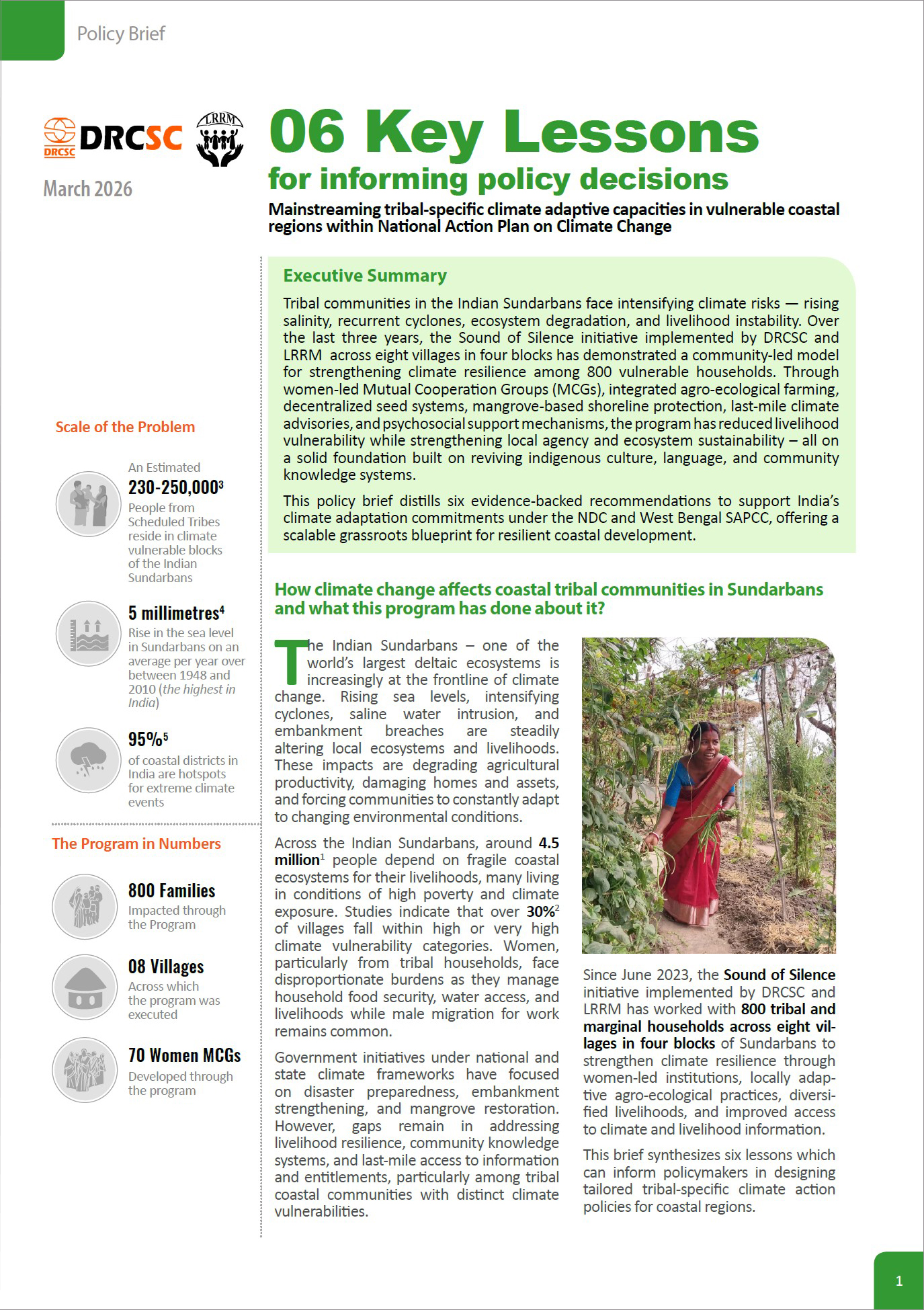
06 Key Lessons for informing policy decisions: Mainstreaming tribal-specific climate adaptive capacities in vulnerable coastal regions within National Action Plan on Climate Change
Download Full Report
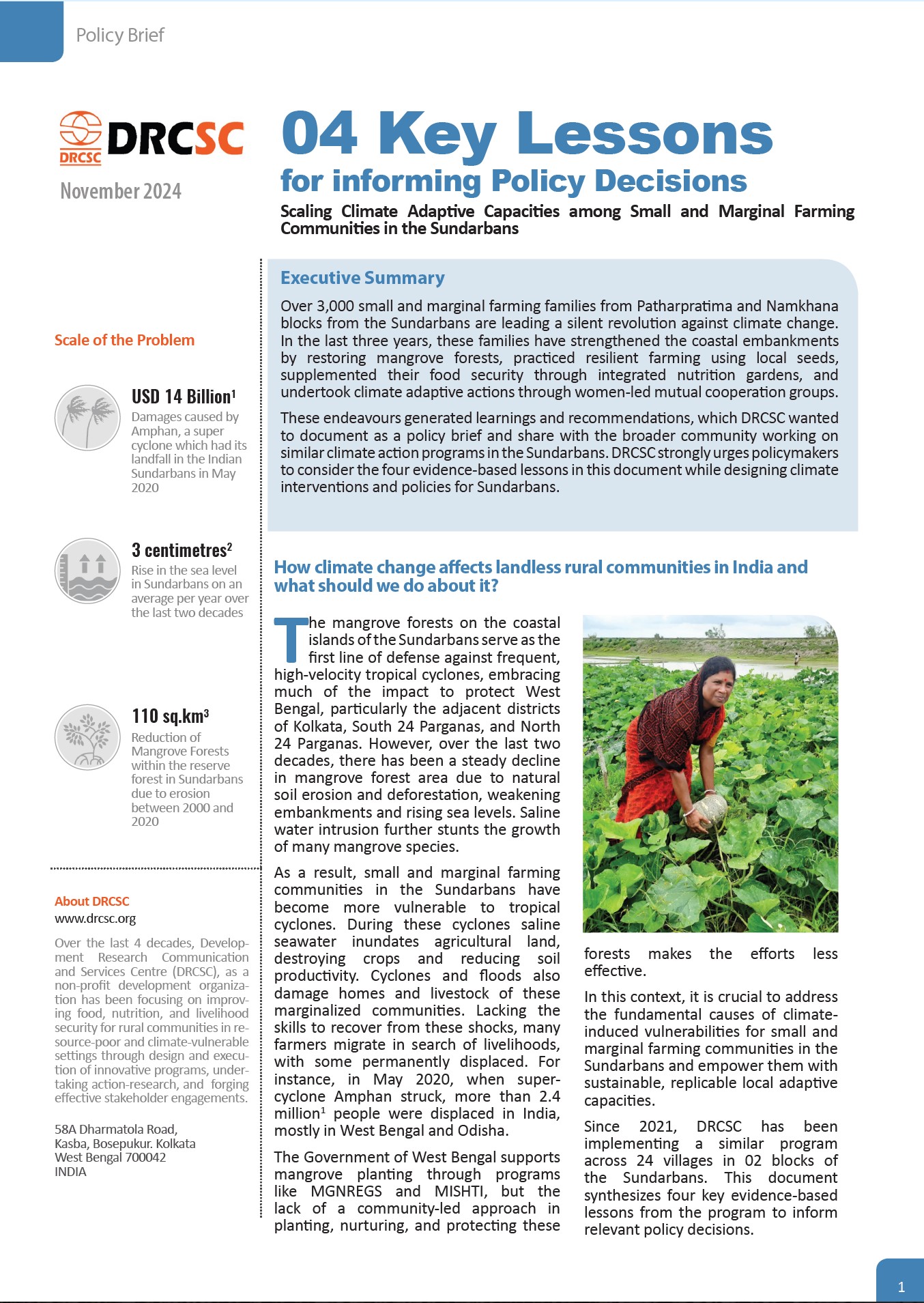
Four Key Lessons for Policy Consideration: Scaling Climate Adaptive Capacities among Small and Marginal Farming Communities in the Sundarbans
Download Full Report
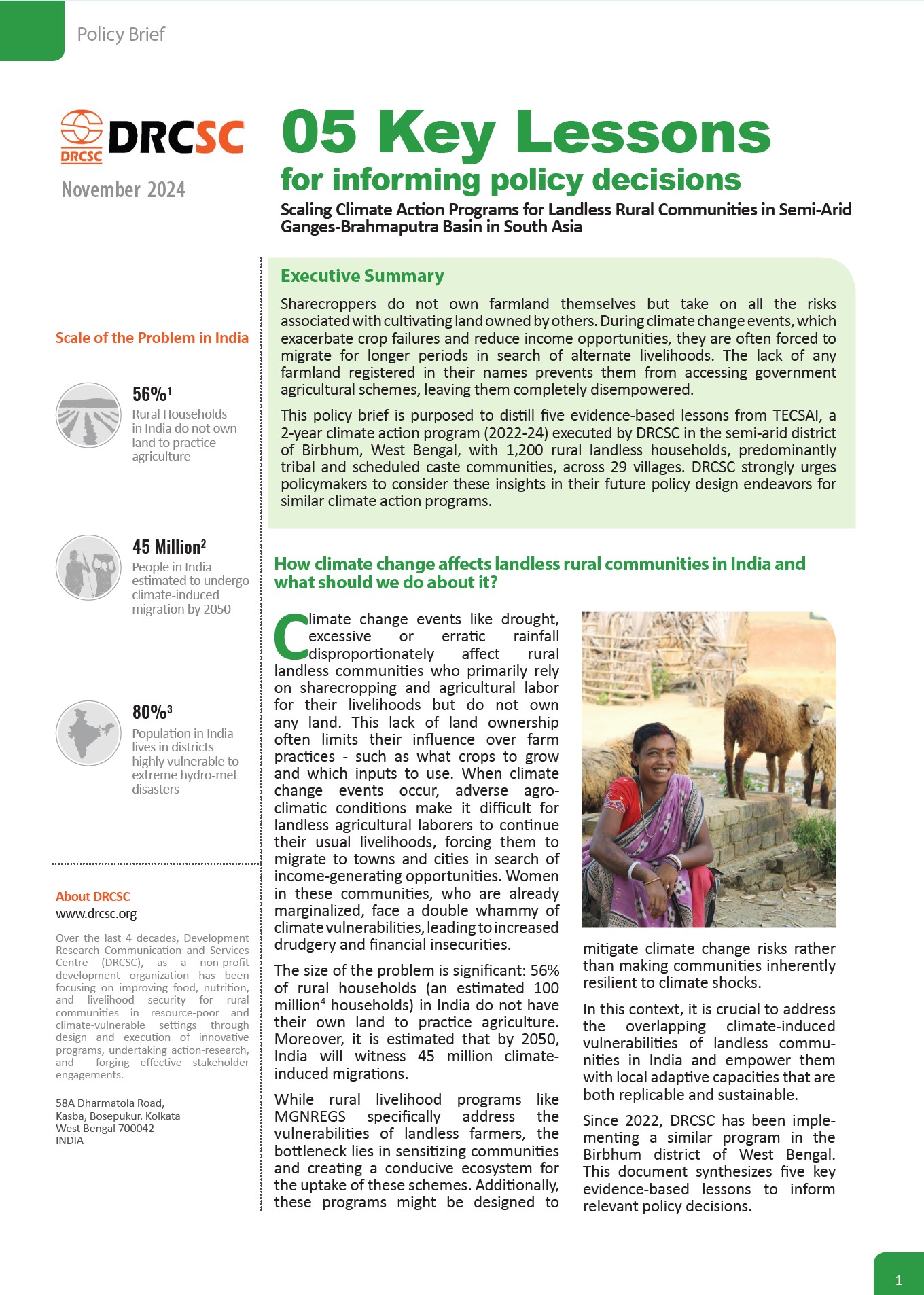
Five Key Lessons for Policy Consideration: Scaling Climate Action Programs for Landless Rural Communities in Semi-Arid Ganges-Brahmaputra Basin in South Asia
Download Full Report
View Blog Posts
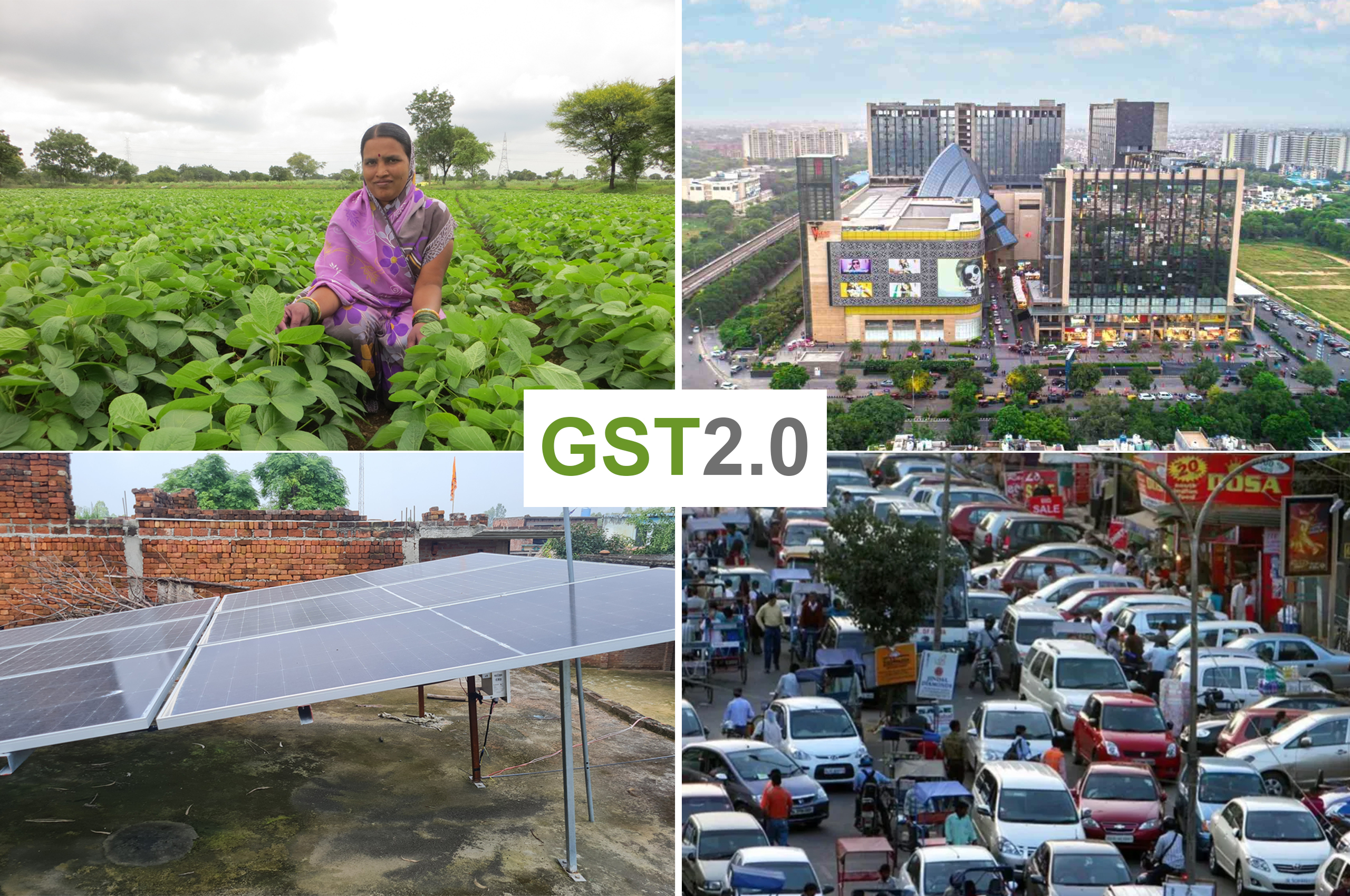
GST 2.0 and Tax Cuts: Can They Make Growth Fairer and Greener?
India's latest GST reform, being termed as GST 2.0, is more than just slashing rates. By simplifying the tax structure, cutting levies on essentials, and supporting renewable infrastructure, it's open..
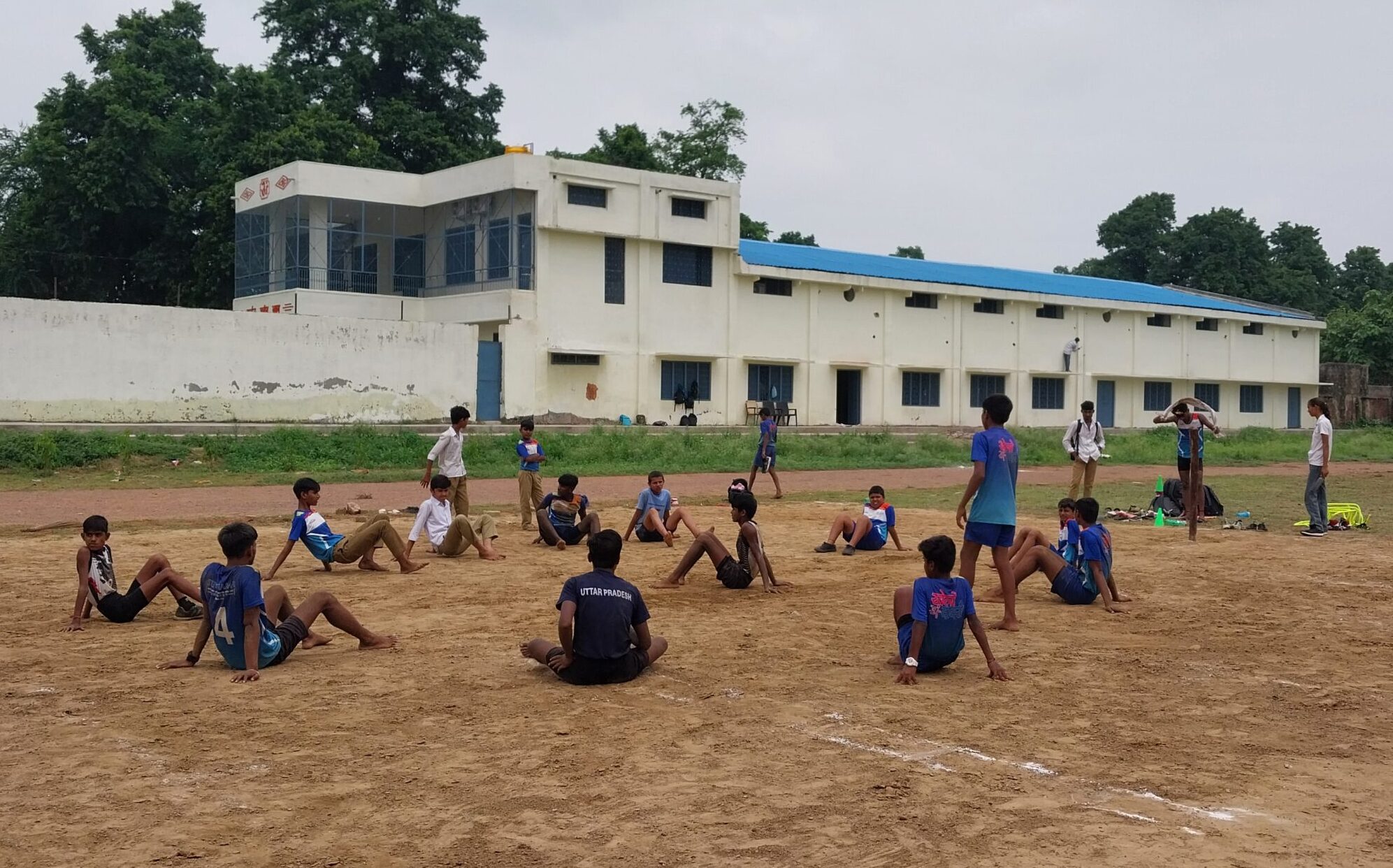
Reimagining Sports in CSR: From Tokenism to a Vehicle for Multiplying Impact
In 2023–24, Indian companies spent about ₹1,396 crore of their CSR budgets on sports — just 4% of the total ₹34,909 crore Indian corporates spent on CSR that year. Most of the rest went to edu..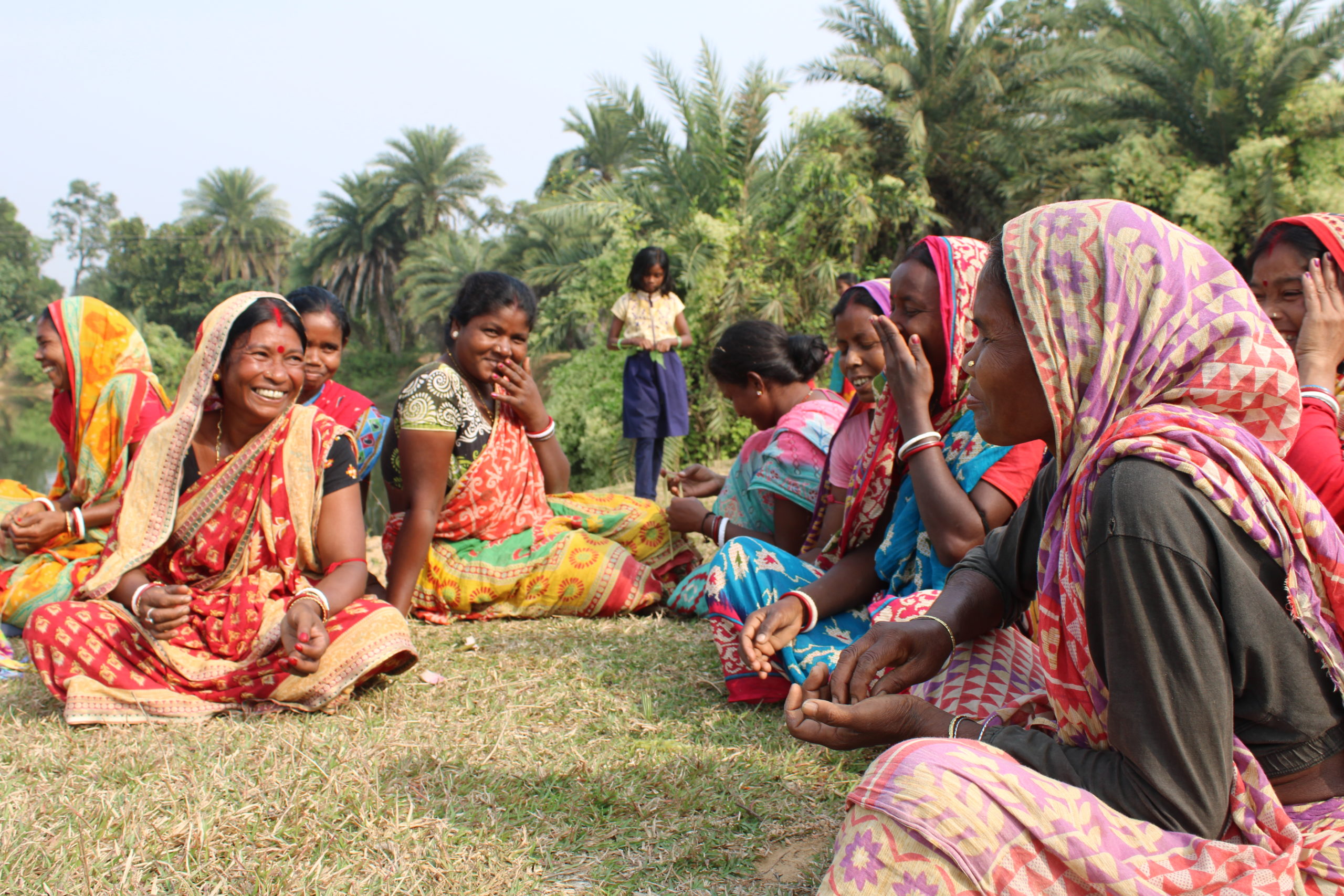
Interactive SHG Map of India: 7.5 million Women Self Help Groups are spread across 27 States and 6 UTs in India
Under the National Rural Livelihood Mission (NRLM), India has 7.5 million Women Self Help Groups (SHGs) spread across 27 states and 6 Union Territories. Each of these small, self-governed, and peer-co..