
Recent Developments,
Key Innovations, and
Insightful Reports
Your One Stop Platform for Regular Sector Updates
Sector news
View By Category
Categories
- See all
- Agriculture
- Clean Cookstoves
- Clean Energy
- Climate Action
- Digital Technology
- Education
- Financial Services
- General
- Healthcare
- Hygiene
- Impact Investment
- Inclusive Value Chains
- Livelihoods
- Livestock
- Lower Income Consumers
- Marketing, Distribution and Sales for BoP
- Nutrition
- Sanitation
- Water
- Women Empowerment


September 10, 2012
Private banks leading charge in developing markets
With the knowledge of how innovatively disruptive financial products aid financial inclusion while generating profits in emerging markets, private banks in developing countries are now offering their own mobile money services. Read more here.
September 10, 2012
According to a recent survey, 86 per cent of Egyptian families have mobile phones, while about 8 per cent of the families used internet, and these figures are lower for rural areas. Read more here.
Nonbank E-Money Issuers (NEMIs) can potentially play avery important role in providing a portfolio of financial services to the currently financially excluded. This report talks about the risks presented by NEMIs, their adoption in developing countries and more. Read it here.
September 10, 2012
Egypt: Households spend US$93 annually on phones
According to a recent survey, 86 per cent of Egyptian families have mobile phones, while about 8 per cent of the families used internet, and these figures are lower for rural areas. Read more here.
September 10, 2012
India: Desktop internet usage falls behind mobile internet usage
According to a recent survey conducted by StatCounter, internet usage in India is now more common on mobile phones (51.63 per cent) than on desktops (48.37 per cent). India follows a trend which was recently found in China as well. While Chinese boom in usage of mobile phones for internet […]
September 10, 2012
Nigeria: Internet changing the way the country develops
Availability of ICT services, especially the internet is changing the way Africa develops. It has uses in business for small-scale entrepreneurs, information for farmers, and more. Yet, despite decisive moves in expanding internet coverage, the bandwidth remains slow, and it is evident that there is a long way to go. […]
September 10, 2012
Internet usage growth in India led by rural areas
According to a report by IAMAI (Internet and Mobile Association of India) and IMRB (Indian Market Research Bureau), the growth in India in terms of internet usage is being led by rural India – penetration grew from 2.6 per cent in 2010 to 4.6 per cent in 2012. Rural India […]
September 10, 2012
India: Karnataka government plans to go solar with its street lights
The state government of the Indian state of Karnataka is planning to use solar lights for its streets. Karnataka has also set for itself a solar installation goal of 200MW by 2016. Read more here.
September 10, 2012
India: Government set to spend INR 20 billion on solar mission
To keep the ambitious JNNSM (Jawaharlal Nehru National Solar Mission) alive, and to woo private companies to produce solar energy, the government of India may have to spend as much as INR 20 billion. Under the second phase of the solar mission, to commence in 2013, the government plans to […]
September 10, 2012
First Nanostructured 3D solar cell unveiled by Solar3D Inc
Solar 3D Inc, the developer of a 3D solar cell that maximized the efficiency of solar energy conversion recently unveiled its silicon solar cell which produces 250 per cent more power than the basic silicon solar cell. Read more here and here.
Get The Latest From The Social Sector In Your Inbox

Subscribe to our newsletter
View Our Publications
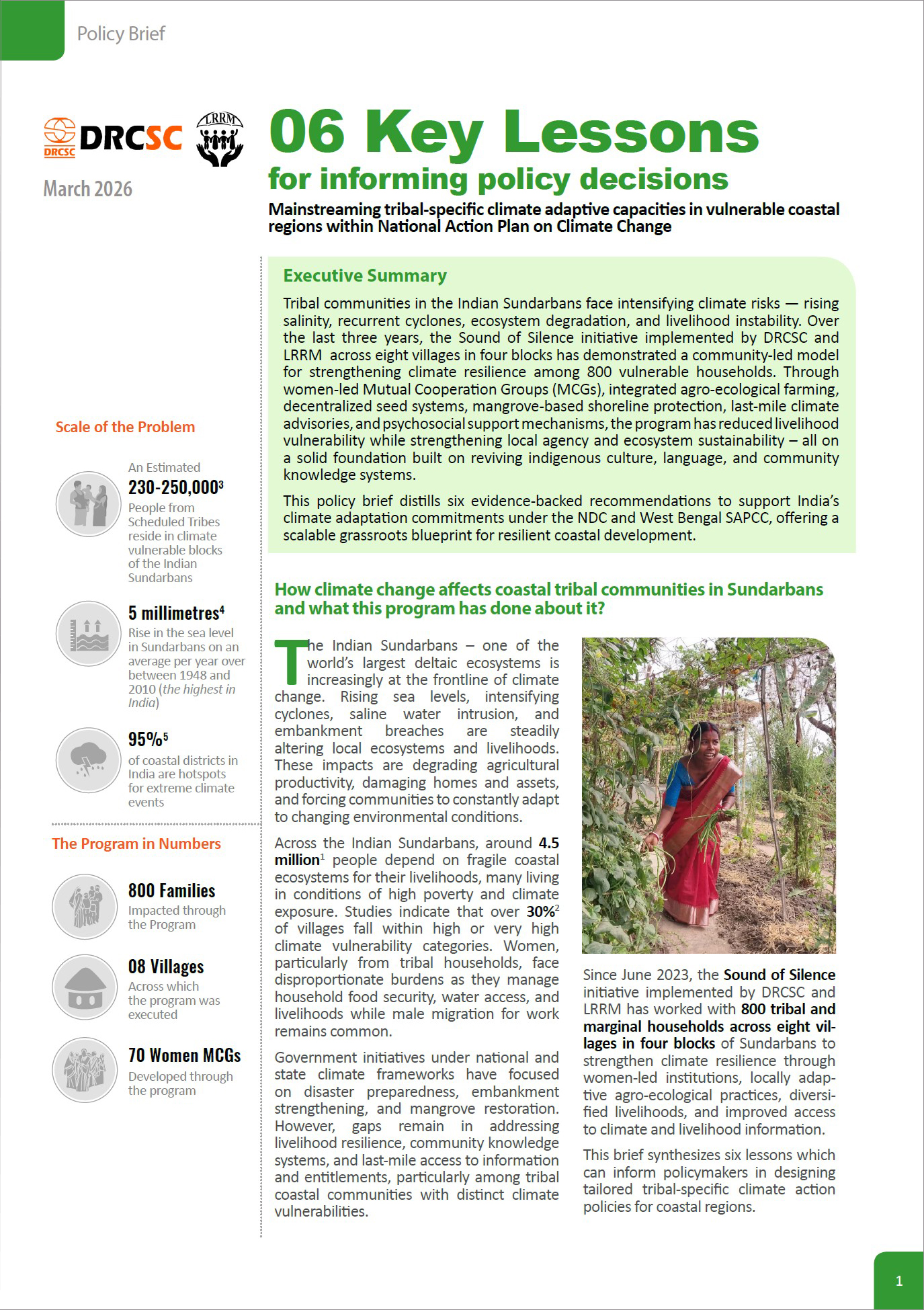
06 Key Lessons for informing policy decisions: Mainstreaming tribal-specific climate adaptive capacities in vulnerable coastal regions within National Action Plan on Climate Change
Download Full Report
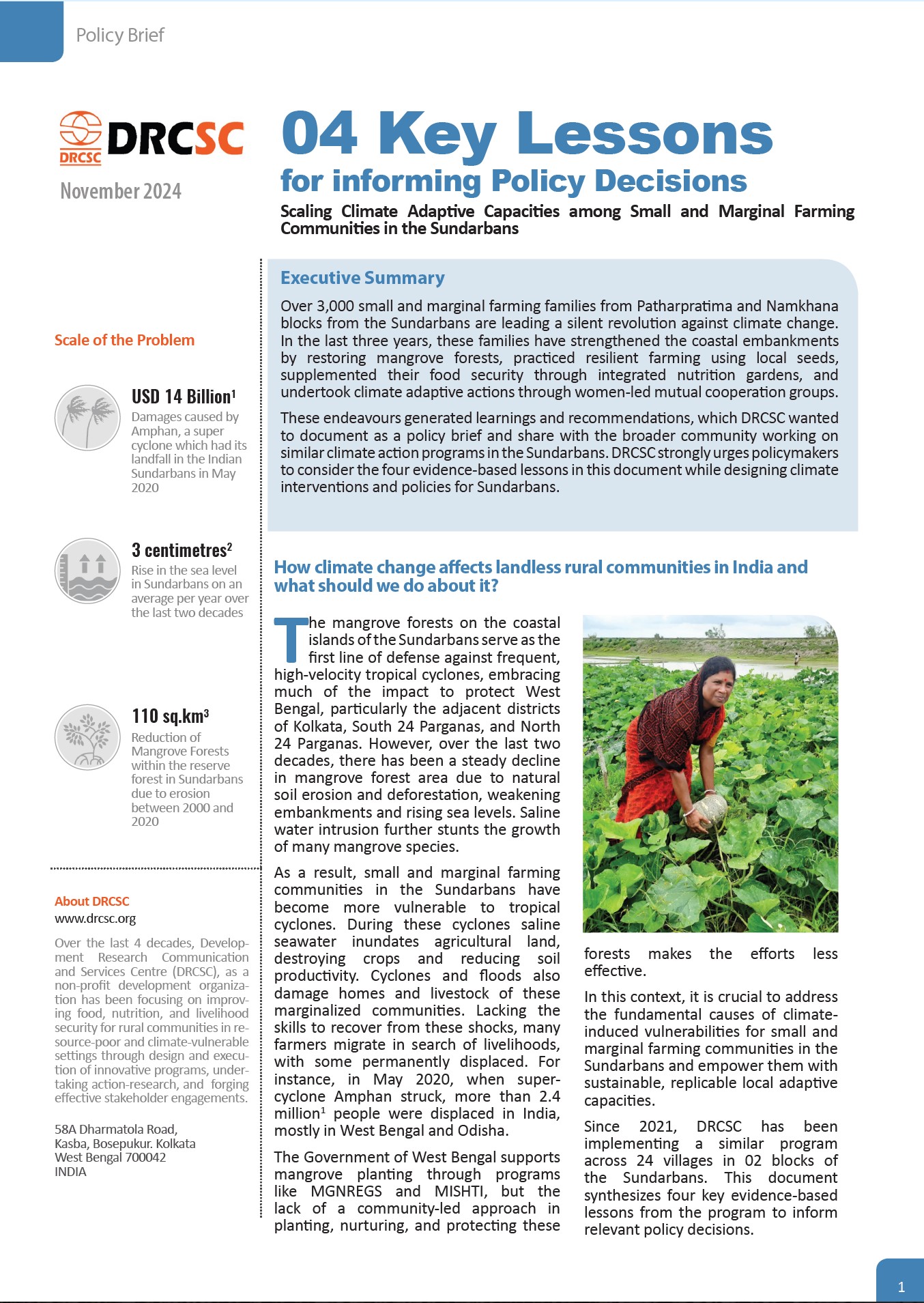
Four Key Lessons for Policy Consideration: Scaling Climate Adaptive Capacities among Small and Marginal Farming Communities in the Sundarbans
Download Full Report
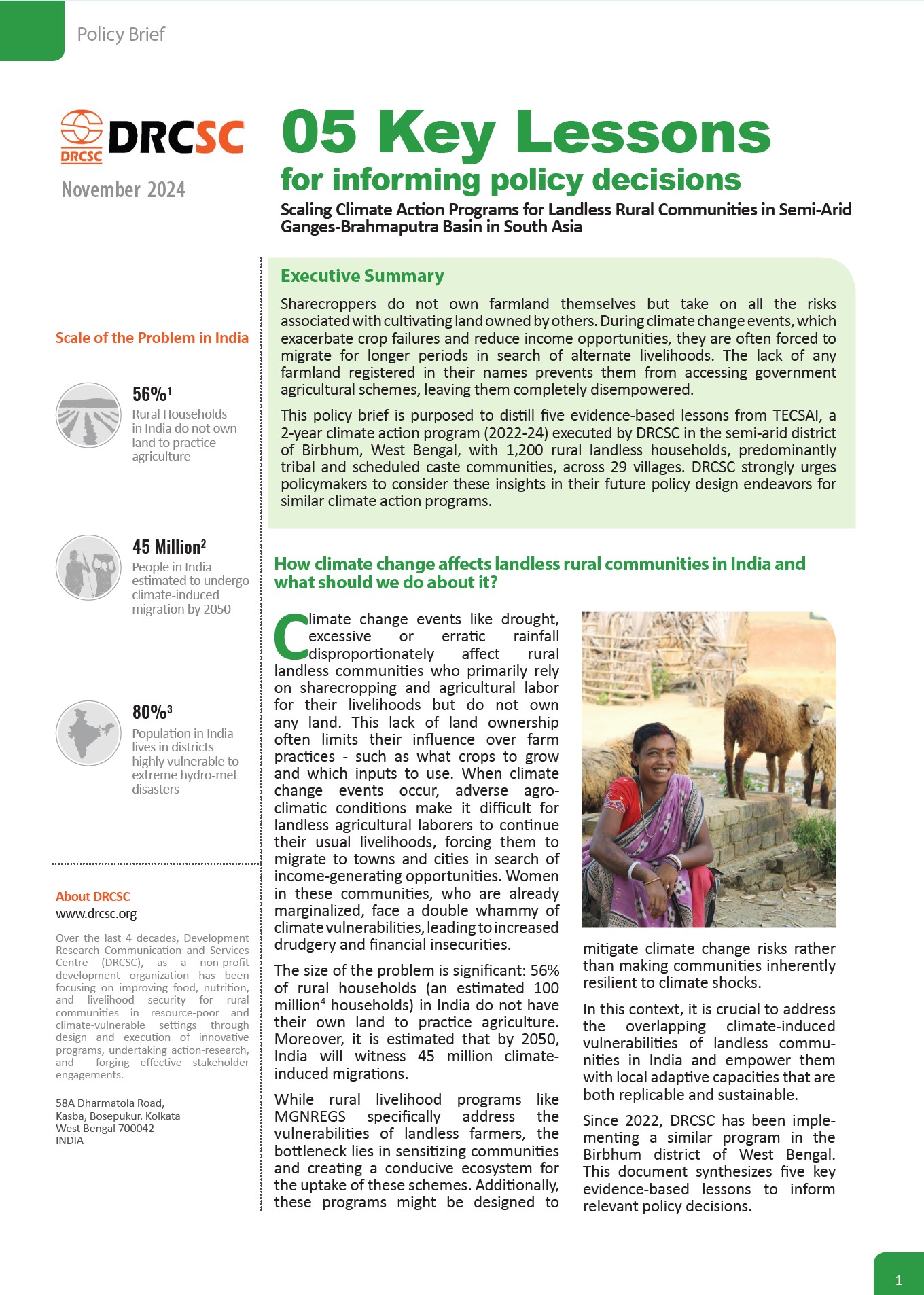
Five Key Lessons for Policy Consideration: Scaling Climate Action Programs for Landless Rural Communities in Semi-Arid Ganges-Brahmaputra Basin in South Asia
Download Full Report
View Blog Posts
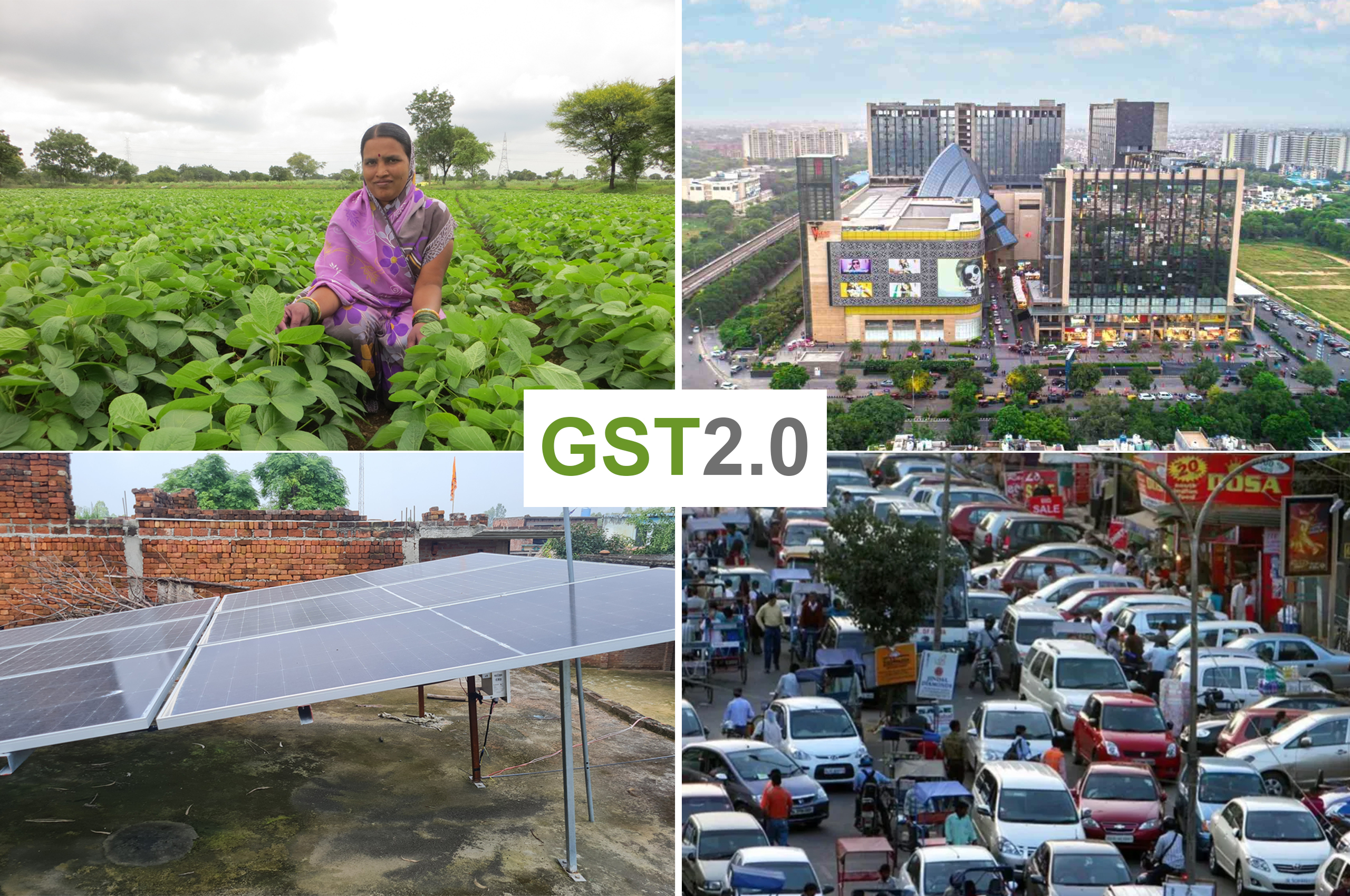
GST 2.0 and Tax Cuts: Can They Make Growth Fairer and Greener?
India's latest GST reform, being termed as GST 2.0, is more than just slashing rates. By simplifying the tax structure, cutting levies on essentials, and supporting renewable infrastructure, it's open..
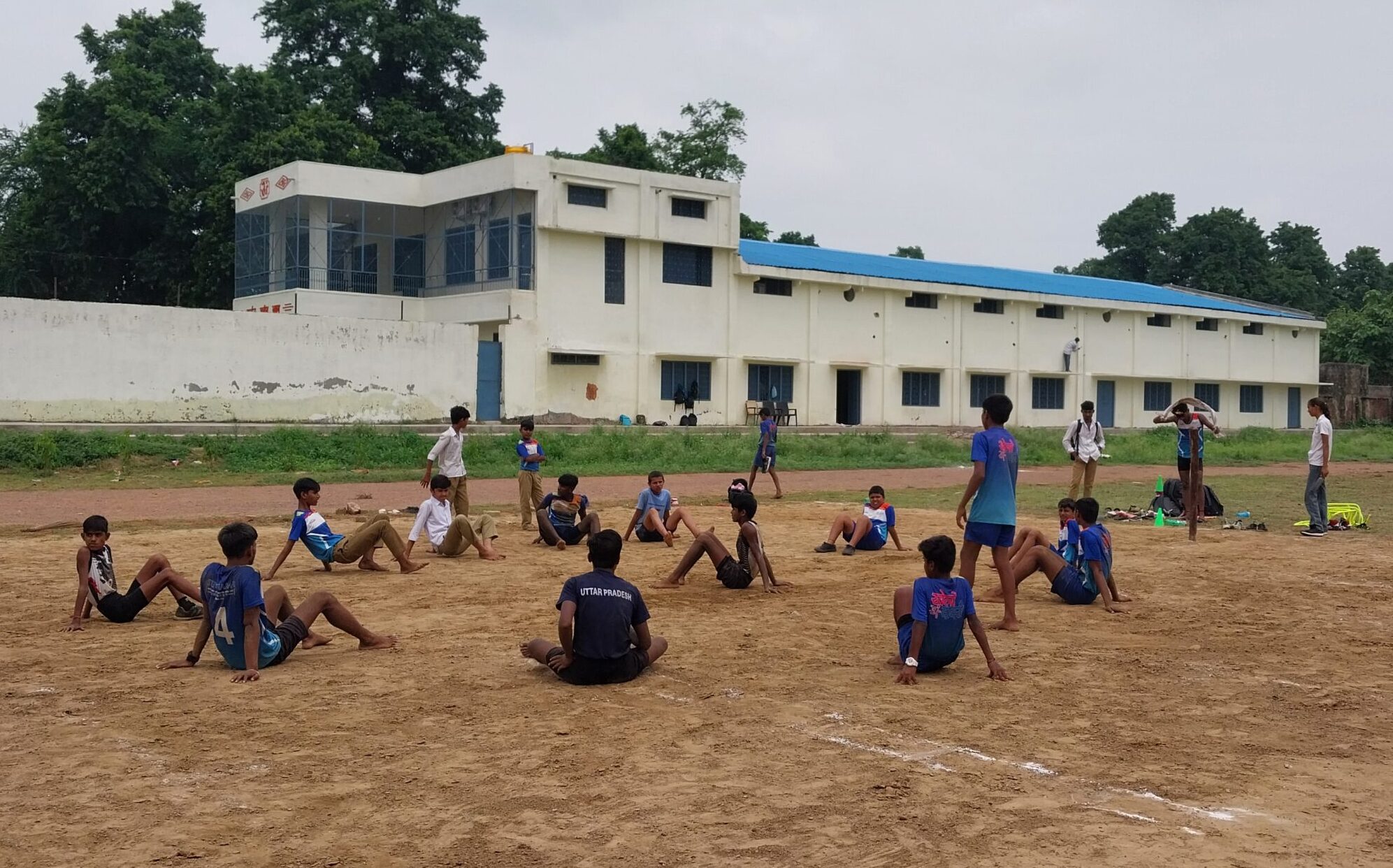
Reimagining Sports in CSR: From Tokenism to a Vehicle for Multiplying Impact
In 2023–24, Indian companies spent about ₹1,396 crore of their CSR budgets on sports — just 4% of the total ₹34,909 crore Indian corporates spent on CSR that year. Most of the rest went to edu..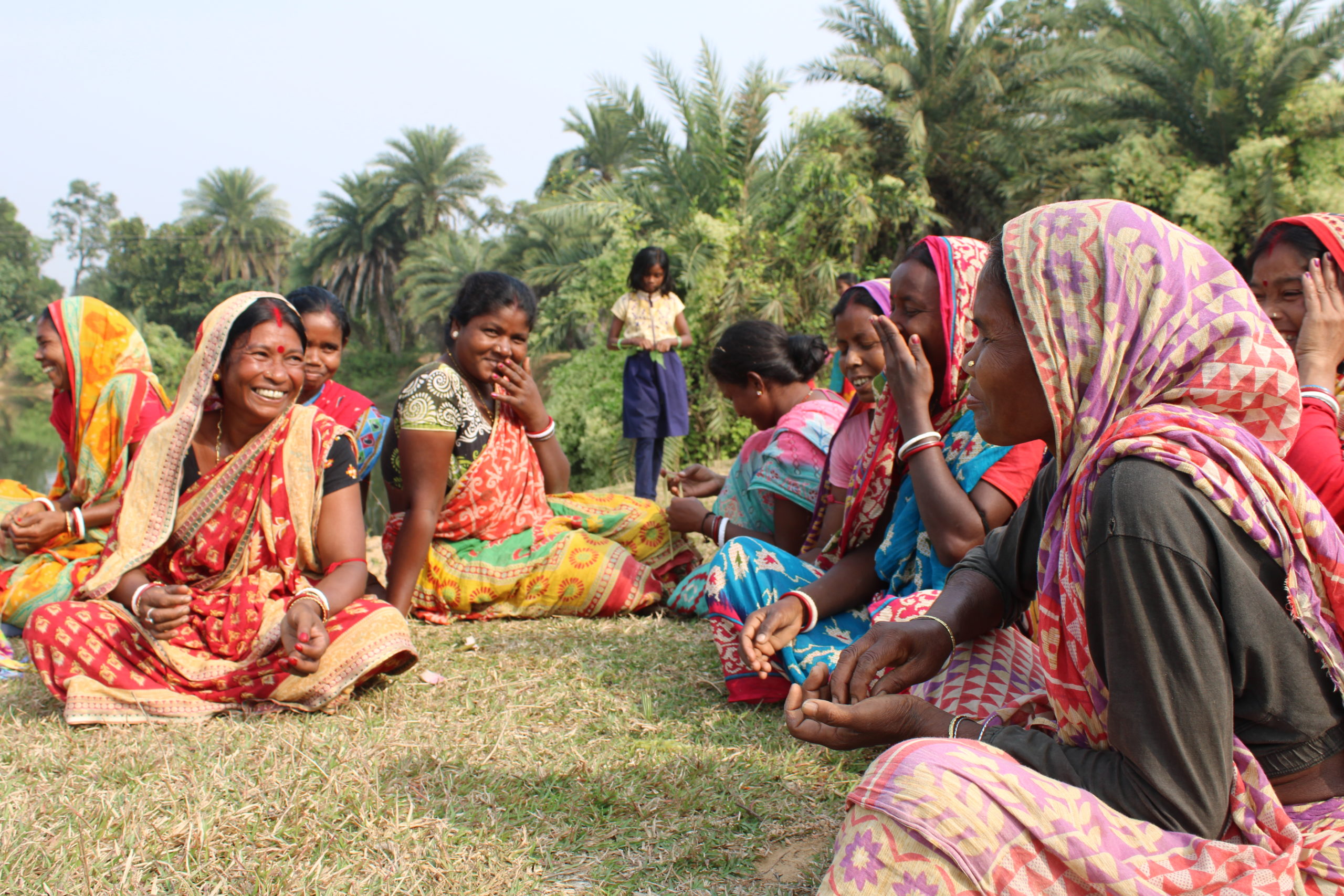
Interactive SHG Map of India: 7.5 million Women Self Help Groups are spread across 27 States and 6 UTs in India
Under the National Rural Livelihood Mission (NRLM), India has 7.5 million Women Self Help Groups (SHGs) spread across 27 states and 6 Union Territories. Each of these small, self-governed, and peer-co..